The life of Xiao Shi in the Liexian zhuan runs to barely a hundred characters, yet it left behind one durable phrase, the Phoenix Terrace; the dragon and the "dragon-riding" son-in-law belong to later retellings. This reading starts from the Han text and then asks what a Ming novel and a Tang poem each added to it.
The Chinese quoted throughout is the received Liexian zhuan life of Xiao Shi as given in the Wikisource text of the full collection; it says only that the couple flew away with the phoenixes and that the men of Qin built a shrine to the Phoenix Maiden inside the Yong palace; it names no dragon. The red dragon, the purple phoenix and the shrine at Mingxing Cliff on Mount Hua come from chapter 47 of the Ming novel Dongzhou lieguo zhi and are marked as such. Li Bai's poem follows the Quan Tangshi, juan 165. The English renders xiao as "flute," the usual compromise for a term covering both the end-blown flute and the panpipe, and keeps Phoenix Terrace (tai) distinct from the novel's Phoenix Tower (lou); sheng is left transliterated as a reed pipe.
The Flute Player at the Qin Court
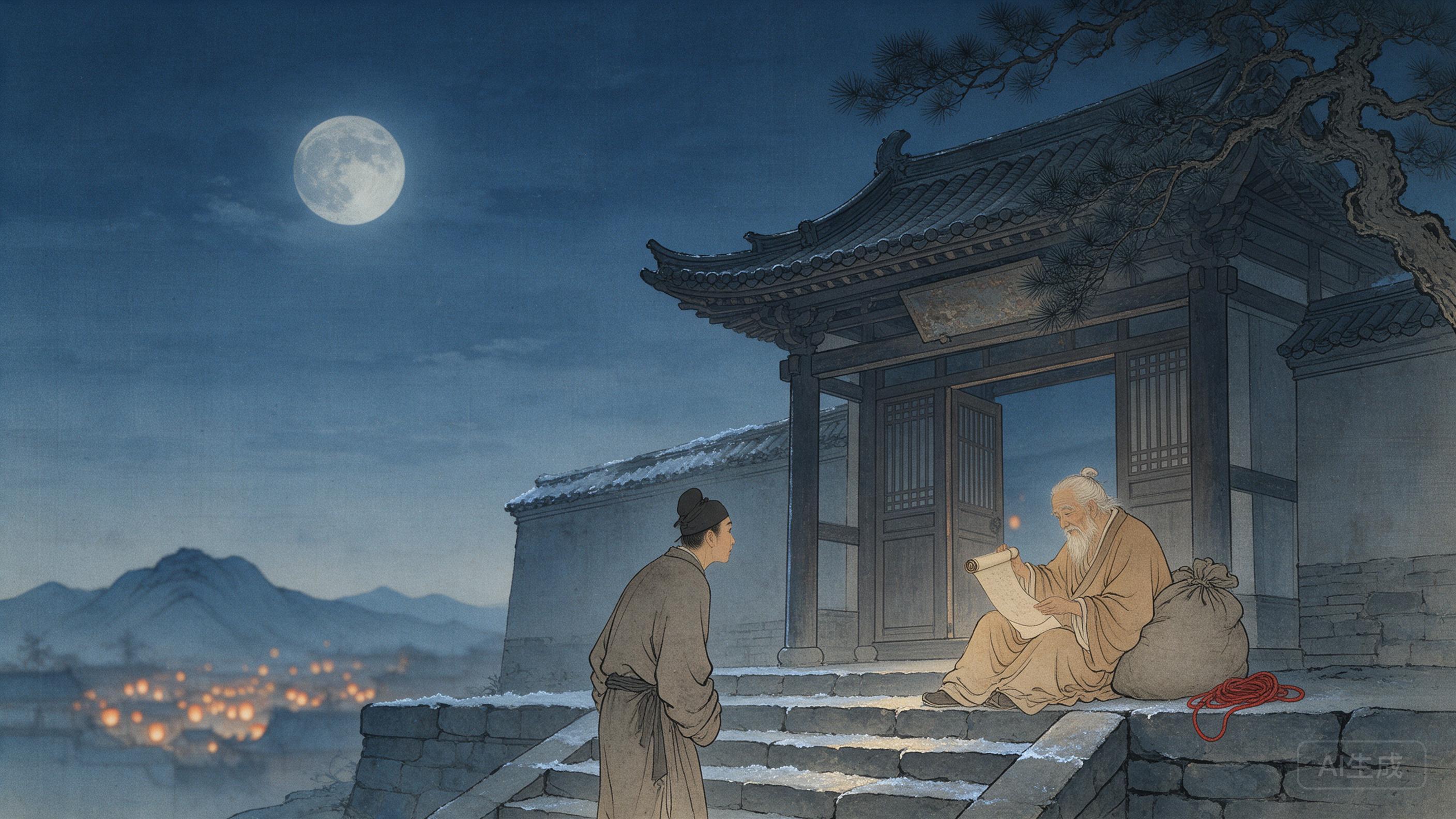
The earliest account of Xiao Shi can be read in a minute, and it is nearly all the evidence there is. It survives in the Liexian zhuan (列仙傳, Biographies of Immortals), a collection traditionally attributed to Liu Xiang (77–6 BCE) of the Han court, though the received text grew over centuries. The chapter opens with a period and a man: "Xiao Shi was a man of the time of Duke Mu of Qin." Duke Mu ruled Qin in the seventh century BCE, in the Spring and Autumn period, when Qin was one frontier state among many in the Yellow River basin.
The next sentence supplies his art: "He was good at blowing the xiao, and could summon peacocks and white cranes into the courtyard." The xiao is a bamboo flute, though the word can mean the end-blown flute or the older panpipe; translations settle for "flute" and lose the ambiguity. What matters is the effect: a wind instrument that draws birds. The cranes and peacocks simply arrive, as if the music had turned a courtyard into a habitat.
A Daughter Who Answered the Sound
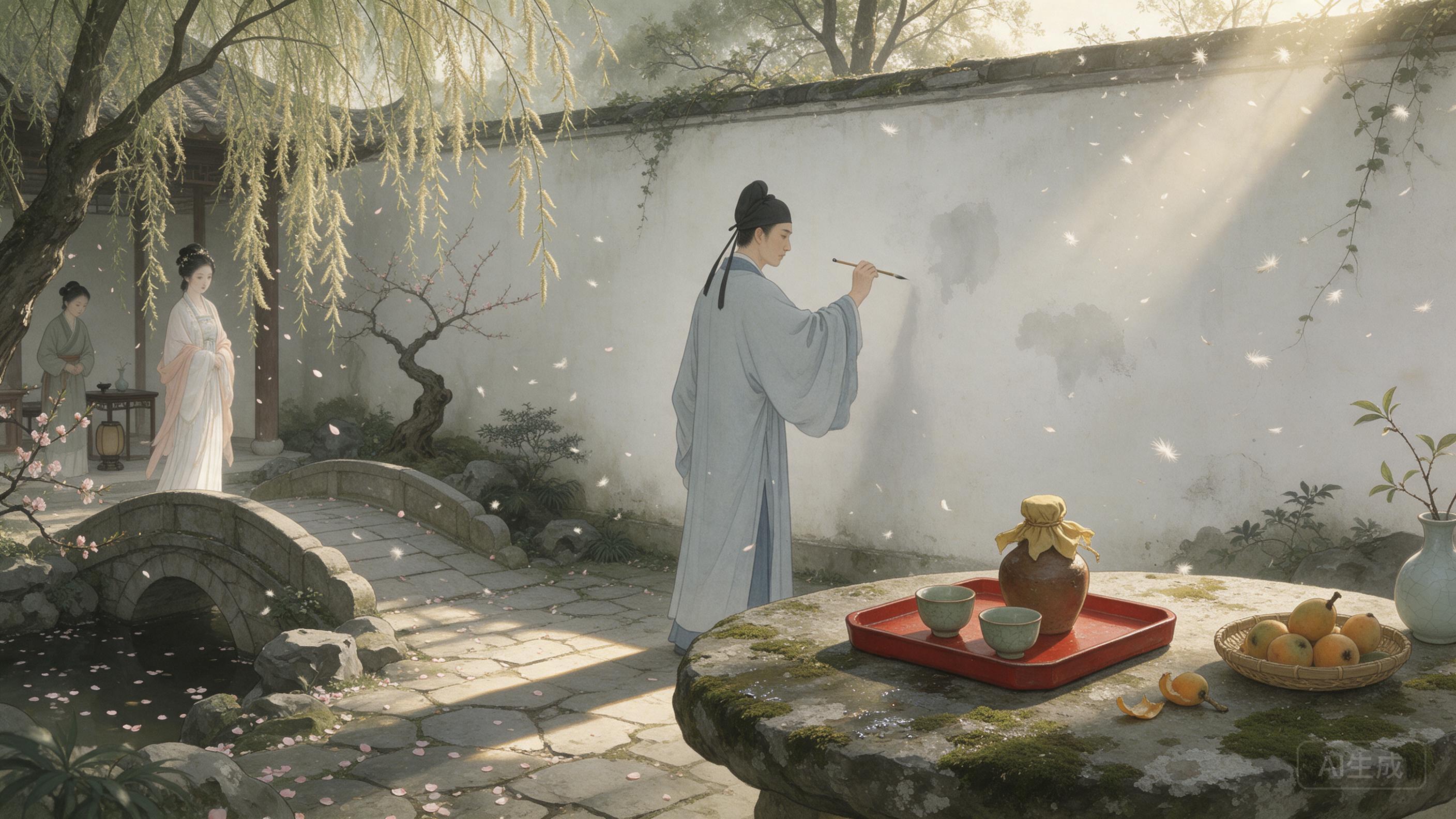
Then comes the daughter: "Duke Mu had a daughter, styled Nong Yu. She liked him, and the duke gave her to him as wife." The line is astonishingly brief, and it matters what it refuses to say: no courtship, no conversation, no description of either face. The verb rendered "liked" (hao) can mean fond of a person or of a thing, and the text does not specify. The marriage is stated as a fact of the court, the way a treaty is stated.
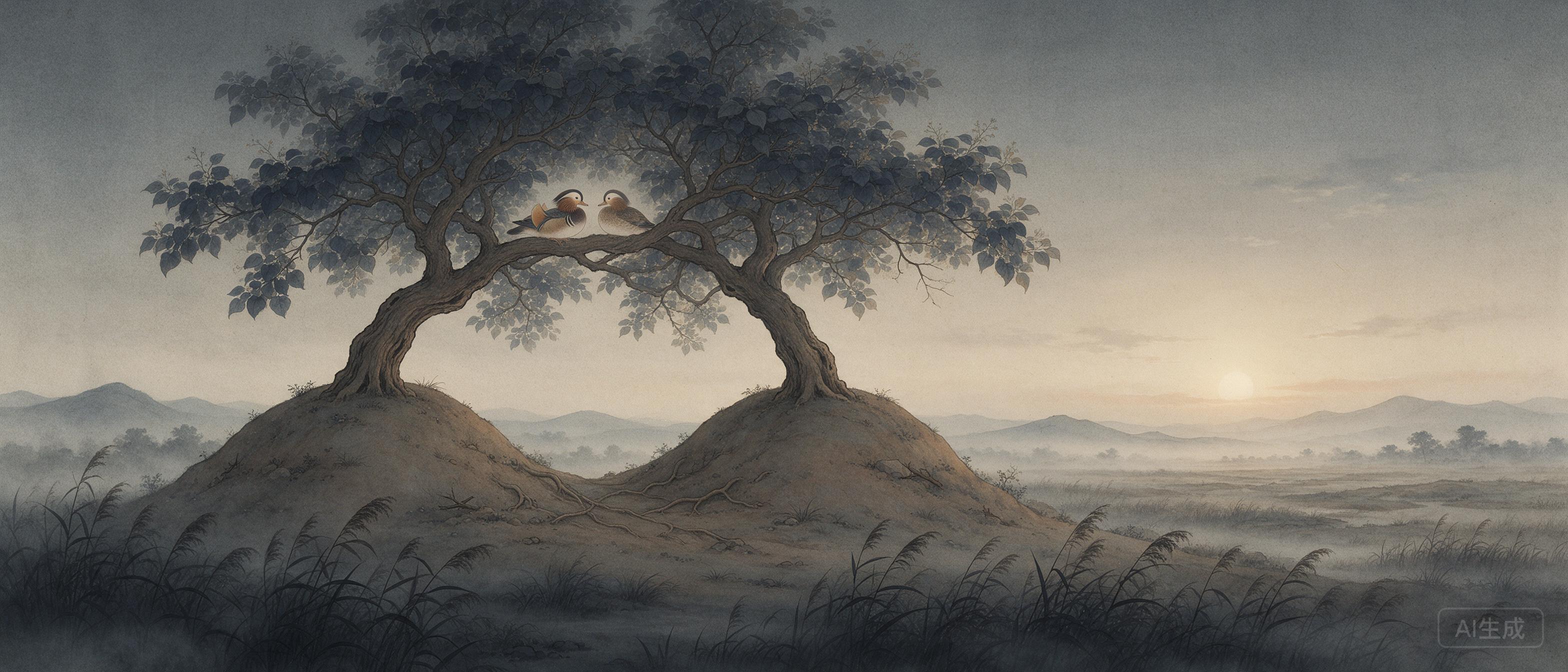
What follows is a curriculum. "Daily he taught Nong Yu to make the cry of the phoenix. After several years her playing resembled the phoenix's voice, and phoenixes came to rest on their roof." A husband teaches a wife a technique, she masters it, and the mastery is what brings the birds. In Chinese art the fenghuang halves into a male feng and a female huang; paired birds on the roof answer the paired players beneath, though the text never spells the allegory out.
The Phoenix Terrace
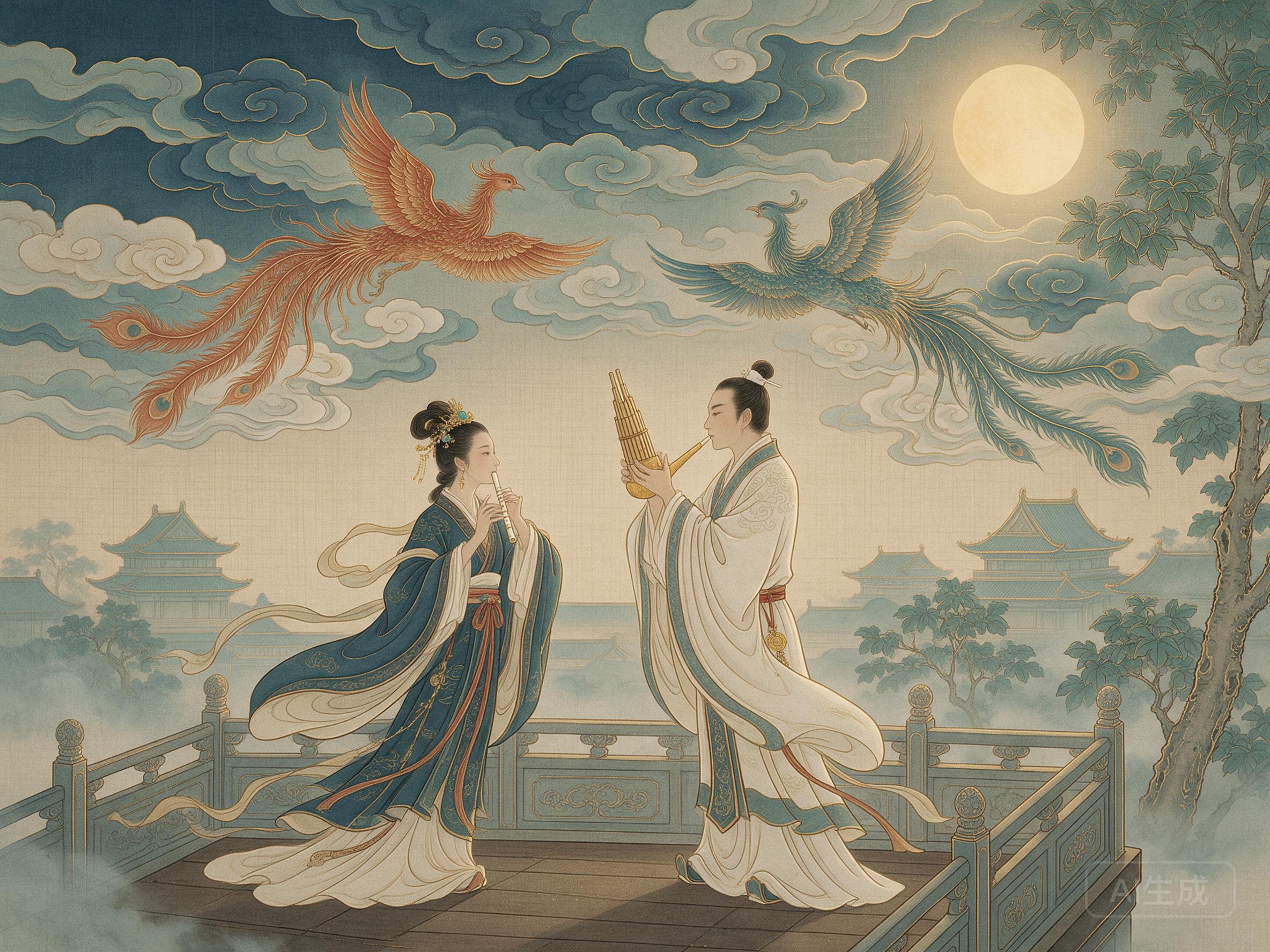
The duke then builds. "The duke made for them a phoenix terrace. The couple stayed on it and did not come down for several years." A tai is a raised platform, a standard mark of elite building in ancient China: the point is height and separation. The couple live above the courtyard, in the air the birds use.
Later tellings expand the architecture. In the Ming novel Dongzhou lieguo zhi (Romance of the Eastern Zhou Kingdoms), the duke builds a tower for his daughter and names it Phoenix Tower, with a terrace in front of it also called Phoenix Terrace. That novel also changes the instrument: there Nong Yu plays the sheng, a reed pipe, and her name comes from a jade blank the duke has carved into one. This is seventeenth-century fiction, not the Han collection.
Two Endings, One Story
The early text ends with a disappearance: "One morning they both flew away with the phoenixes. Therefore the men of Qin made a shrine for the Phoenix Maiden in the Yong palace." They go together, on the same birds; the shrine stands inside the palace at Yong, and the text names no dragon.
The novel tells the departure differently. There Xiao Shi rides a red dragon and Nong Yu a purple phoenix, rising from the terrace into the clouds, and the narrator explains an idiom: "What people today call a 'dragon-riding' son-in-law refers to this." The novel relocates the aftermath to Mount Hua, with the shrine at Mingxing Cliff. The dragon in the familiar phrase is a late arrival: the Han story gives one shared flight, the Ming novel separate mounts and a moral about vocabulary.
What the Story Left Behind
Two images outlived the narrative. Phoenix Terrace and Phoenix Tower became stock phrases for a place of marital happiness touched by the otherworld, useful to any poet who wanted height, music and departure. And the story became a standard illustration of the son-in-law who is more than ordinary.
Tang poetry shows the first image still working. Li Bai's "Phoenix Song" opens: "The Qin maiden blows her jade flute, playing the spring of heaven into being. The blue bird does not leave alone: there is another, hand in hand." The Qin maiden is Nong Yu, named by her clan name Ying; the poem keeps the earliest version's central detail, that the birds did not go singly. What the Han text states as ritual and the Ming novel explains as idiom, the poem turns back into a picture: two figures, one instrument between them, and a sky suddenly open.
Sources & further reading
Editorial approach