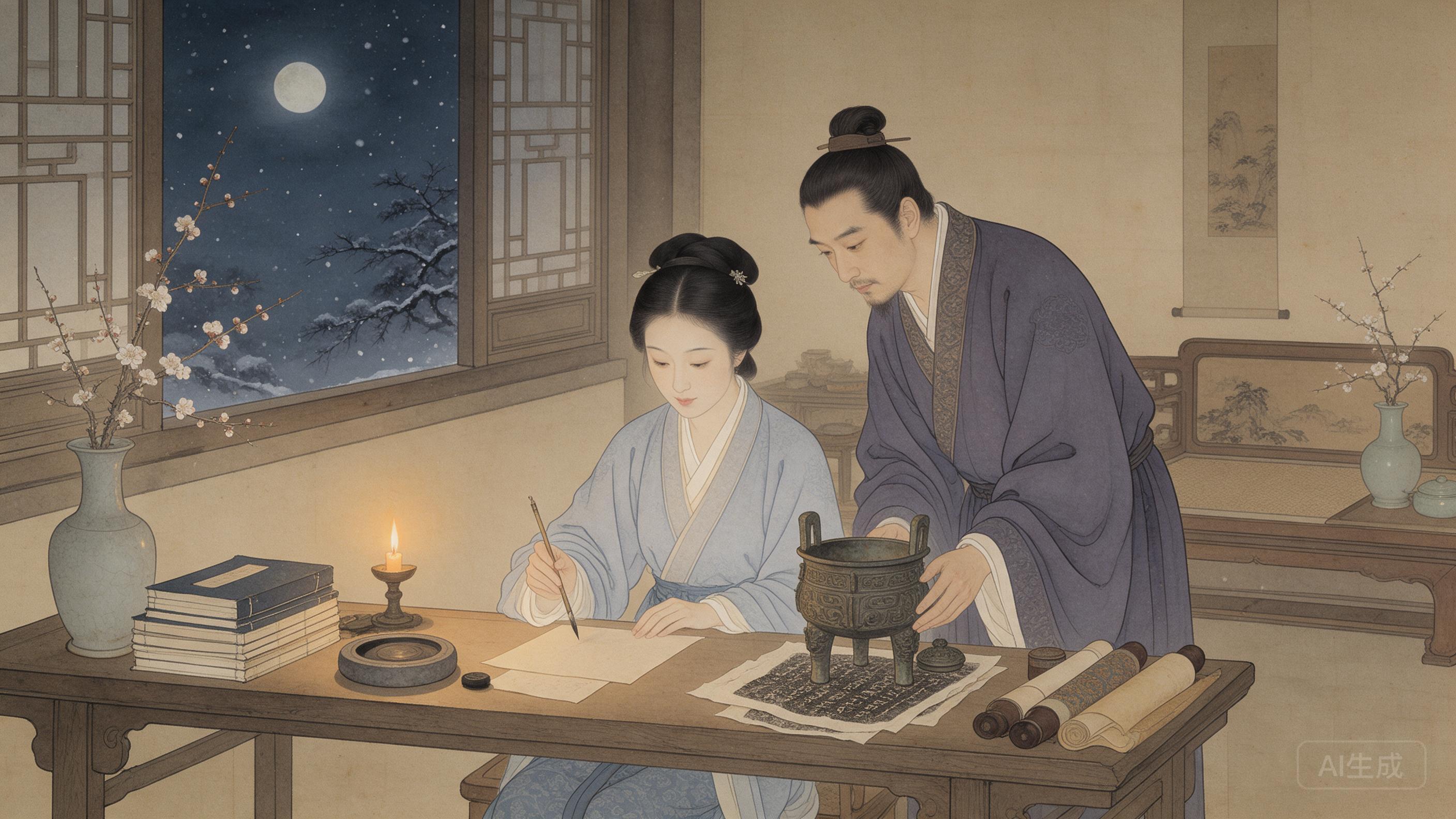
In 1101 a twenty-one-year-old student at the Imperial University, Zhao Mingcheng, married Li Qingzhao, daughter of the official Li Gefei. The household accounts of their first years are kept in five-hundred-copper instalments: clothes pawned on leave days to buy rubbings of old inscriptions in the market at the Xiangguo Temple. Three decades later, after the north had fallen and her husband was dead, she wrote the postface to his catalogue of bronze and stone — a marriage preserved almost entirely in things.
A note on the story: the narrative rests almost entirely on one text, Li Qingzhao's postface to the Jinshi lu, a catalogue of bronze and stone inscriptions compiled by Zhao Mingcheng. It was written after the events it describes, by a widow choosing what to remember, and it defends a collecting life as much as it commemorates a marriage. Its colophon is dated the eighth month of 1132, yet in the same text she counts “三十四年,” thirty-four years, conventionally reckoned from her eighteenth year to her fifty-second; the two reckonings do not agree, and the dating of the postface remains disputed. The account of Zhao's flight over the Jiangning wall in 1129 comes from another source, Li Xinchuan's thirteenth-century chronological history, which cites an earlier tomb inscription and a transport-office memorial. The 1132 marriage and lawsuit are known from that history and from Li Qingzhao's letter to Qi Chongli, a formal parallel-prose appeal with its own rhetorical strategy. The tale of the chrysanthemum lyric sent to Zhao at the Double Ninth appears only in a Yuan-dynasty notebook and is not used here. Li Qingzhao's death is traditionally dated to c. 1155; no Song source fixes the year.
Two Cataloguers in a Poor Household
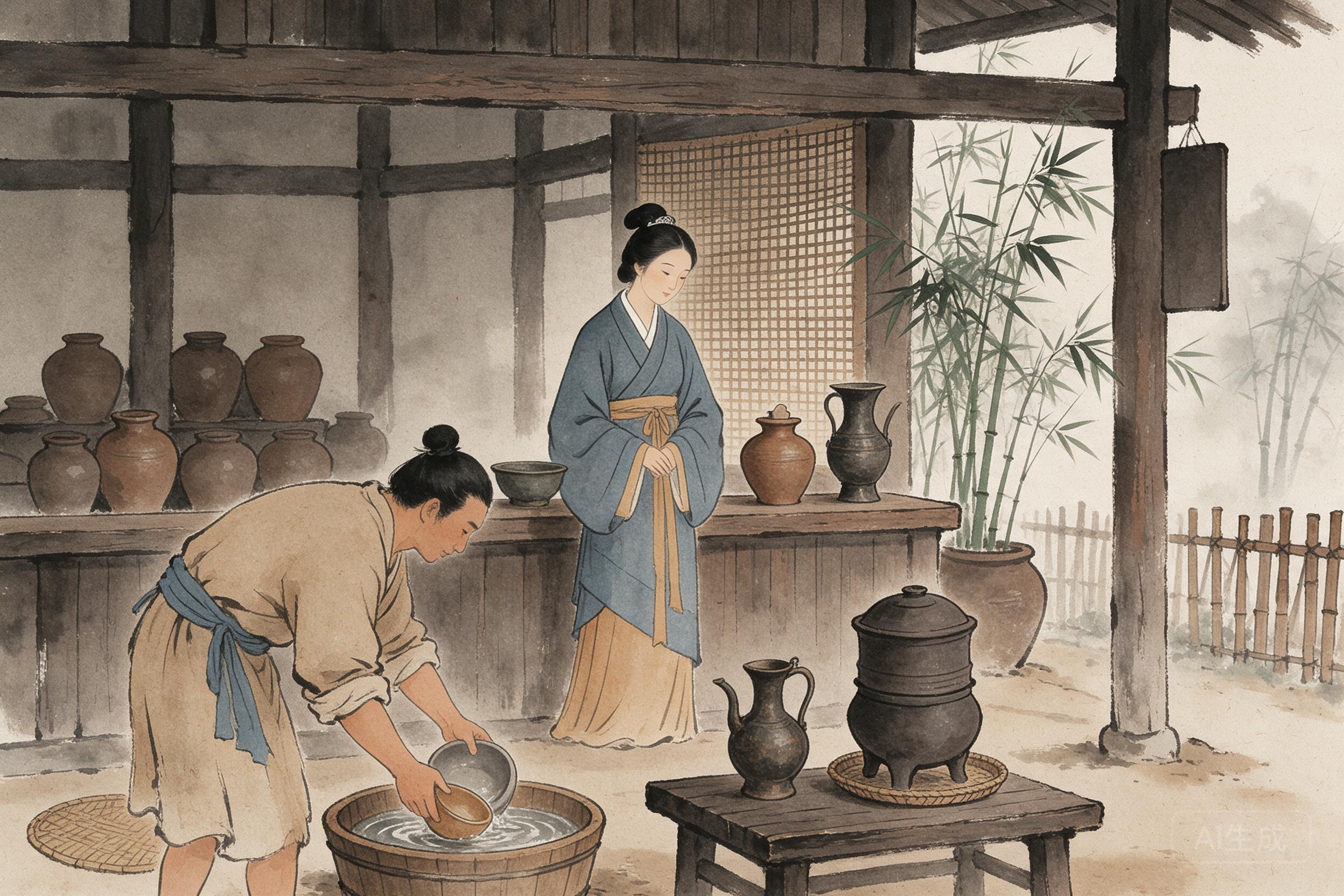
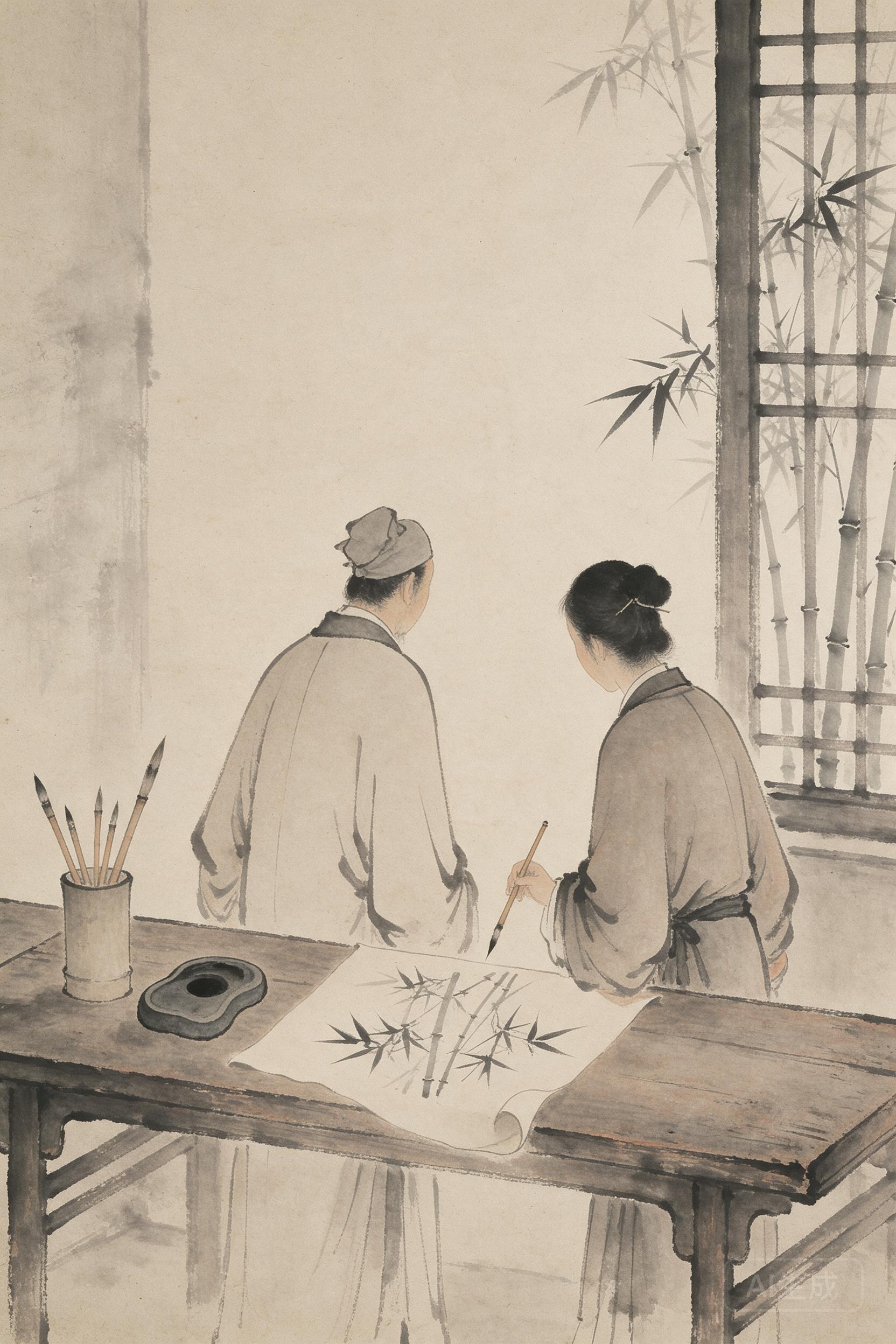
“余建中辛巳,始归赵氏” — “In the xinsi year of the Jianzhong era, 1101, I came as a bride into the Zhao household.” The line, written decades later in her postface to his catalogue of bronze and stone inscriptions, is the one firm date for the marriage. Zhao Mingcheng was twenty-one, a student at the Imperial University; both households were, in her phrase, “族寒,” of thin means. On leave days he pawned clothes for five hundred coppers and walked to the Xiangguo Temple market for rubbings and fruit, which the two studied together. A Xu Xi painting of peonies, priced at two hundred thousand coppers, stayed two nights and went back: “夫妇相向惋怅者数日” — the couple faced each other in dismay for days.
Guilai Hall and the Tea Wager
In Qingzhou, during about ten years of retirement — “屏居乡里十年,” her phrase; the years are a modern reconstruction — the marriage became a method. After meals in the Guilai Hall they brewed tea and wagered on their reading:
“余性偶强记,每饭罢,坐归来堂烹茶,指堆积书史,言某事在某书某卷第几页第几行,以中否角胜负,为饮茶先后。中即举杯大笑,至茶倾覆怀中,反不得饮而起。”
“It happens that I have a retentive memory. After every meal we sat in the Guilai Hall and brewed tea, pointing at the piled books, naming the book, the volume, the page and the line where such and such was recorded; whoever was right drank first. When I won I would lift the cup and laugh until the tea spilled down my front, and get up having drunk nothing.”
The four-character tag “赌书泼茶,” staking books and splashing tea, is a later summary, not her wording: in her text the tea overturns into her lap.
What to Abandon, and in What Order
In the twelfth month of 1127 the Jin army took Qingzhou and the collection stored there ended as ash: “凡所谓十馀屋者,已皆为煨烬矣” — all those ten-odd rooms had become embers. What was moved in time went south by boat, fifteen cartloads ferried across the Huai and the Yangzi. Two years later, on the bank at Chiyang before Zhao left for Huzhou, he set the order of surrender: baggage first, then clothing, then books and scrolls, then antiquities — but the ancestral vessels “可自负抱,与身俱存亡,” to be carried in one's arms, to live or die with their bearer. The instruction is his; later retellings put it in her mouth.
The Summer of 1129
He rode to court through the heat, sickened with malaria; she covered three hundred li in a day and a night to find him dosed with bupleurum and scutellaria, the fever turned to dysentery. “八月十八日,遂不起。取笔作诗,绝笔而终” — on the eighteenth day of the eighth month he did not rise again; he took a brush, wrote a poem, and died. She adds, “殊无分香卖屦之意”: no deathbed dispositions, no dividing of incense or selling of slippers. In the second month of that year, as administrator of Jiangning, he was warned of a mutiny and “弗听,” would not listen; when it broke, he and two officials were lowered over the city wall and fled by night. The record demotes those two and says nothing of any penalty for Zhao.
A Widow, a Lawsuit, and a Quarrel Among Historians
Afterwards the collection kept going. Luggage was abandoned when Hongzhou fell; five baskets were stolen from a wall niche at the Zhong house in Yuezhou; by the time she wrote, “十去其七八,” seven or eight parts in ten were gone. In 1132 she was involved in a marriage to Zhang Ruzhou, a military auditor, and a lawsuit that ended it. The official record says Zhang was convicted after his wife, Lady Li, accused him of inflating the examination attempts by which he had obtained office; the same entry names her as Li Gefei's daughter, who wrote lyrics and styled herself Yi'an. Her letter to the Hanlin academician Qi Chongli says she was “强以同归,” forced to go with him, calls him “驵侩之下才,” no better than a broker, and asked only “求脱去,” to be free — parallel prose addressed to a patron, and arguing. Song writers repeated the story; Qing scholars held the letter had been tampered with; most modern historians accept the marriage. The quarrel is about testimony, not a hidden truth.
What the Poems Can and Cannot Tell Us
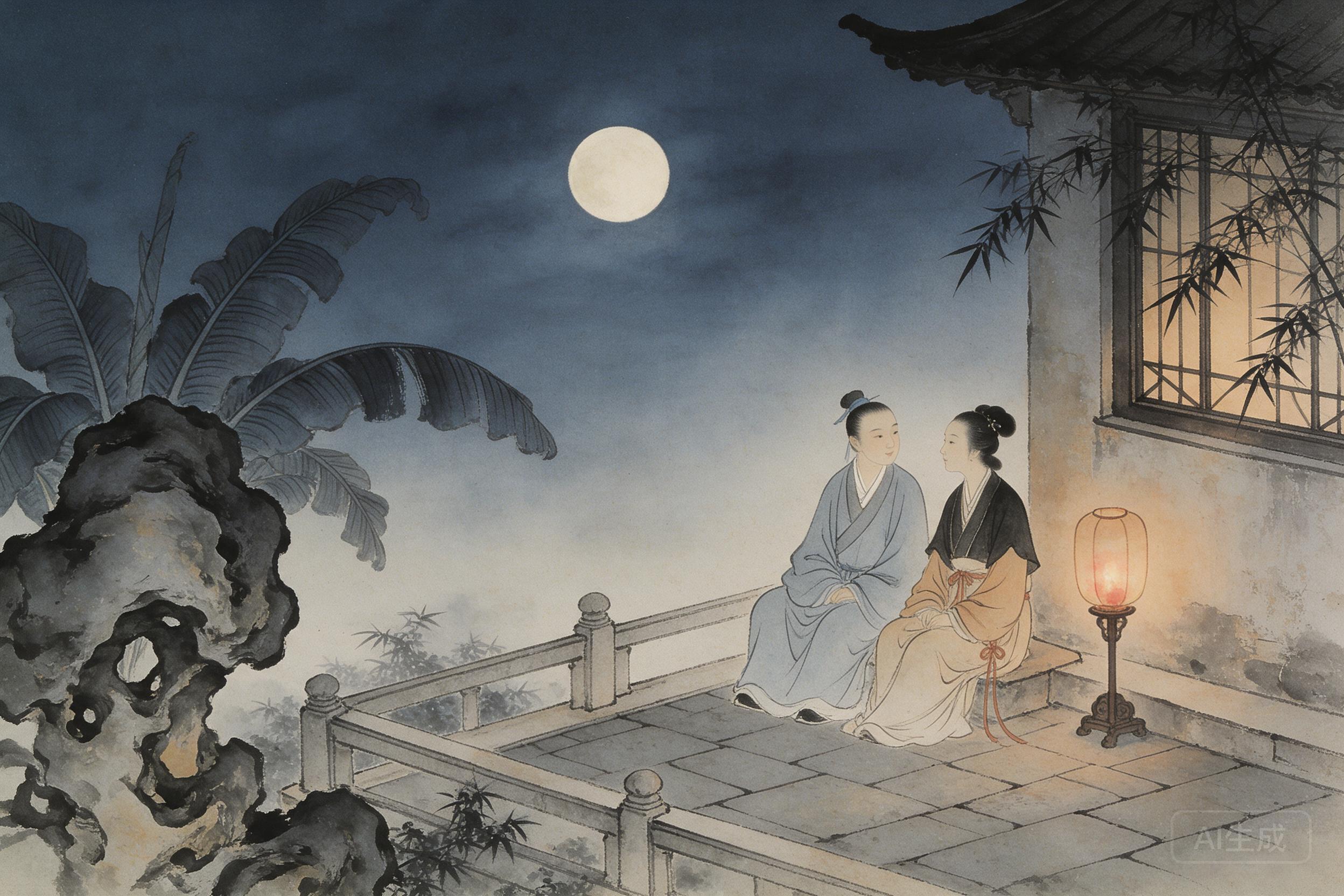
Two famous lyrics sit near this story without belonging to it. “莫道不销魂,帘卷西风,人比黄花瘦” — do not say no one is pining; when the west wind rolls back the curtain, the person inside is thinner than the yellow chrysanthemum. The text is secure, but no Song source dates it, and reading it as a poem of separation sent to Zhao is later interpretation. The same holds for “声声慢,” usually read as a work of her southern exile: secure text, no contemporary date, and calling it a mourning poem for Zhao is a modern reading some scholars reject. What she left is the postface, dated 1132 in its colophon, offered as a warning to later collectors. Its subject is custody: what two people thought worth carrying, and in what order they let it go.
Sources & further reading
- 金石錄後序(李清照),维基文库
- 投翰林學士綦崈禮啟(李清照),维基文库
- 建炎以來繫年要錄/卷058(李心传),维基文库
- 建炎以來繫年要錄/卷020(李心传),维基文库
- 金石錄(四部叢刊本)/後序(劉跂),维基文库
- 醉花陰·薄霧濃雲愁永晝(李清照),维基文库
- 聲聲慢(李清照),维基文库
- 李清照(现代综述,仅用于异说索引),维基百科