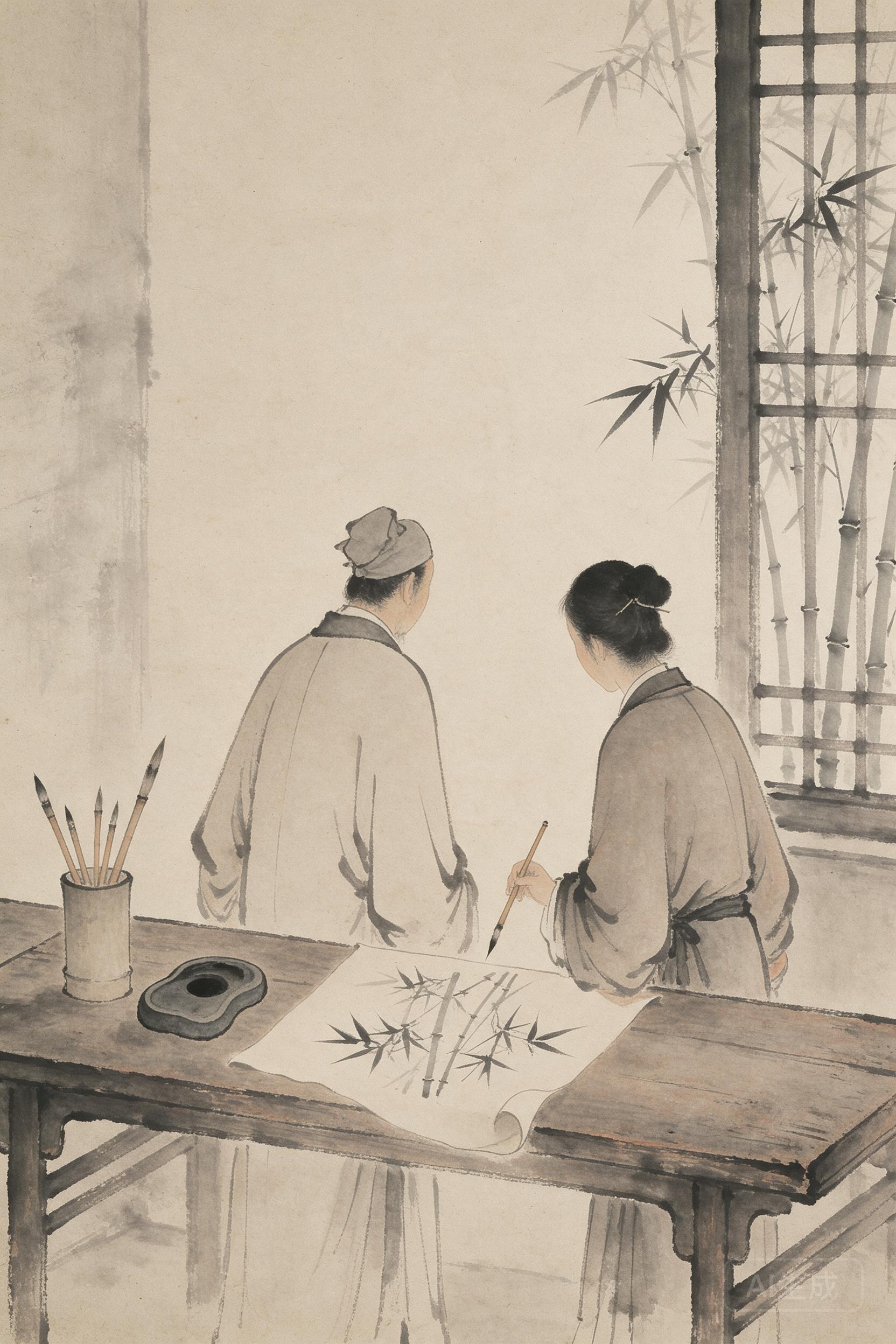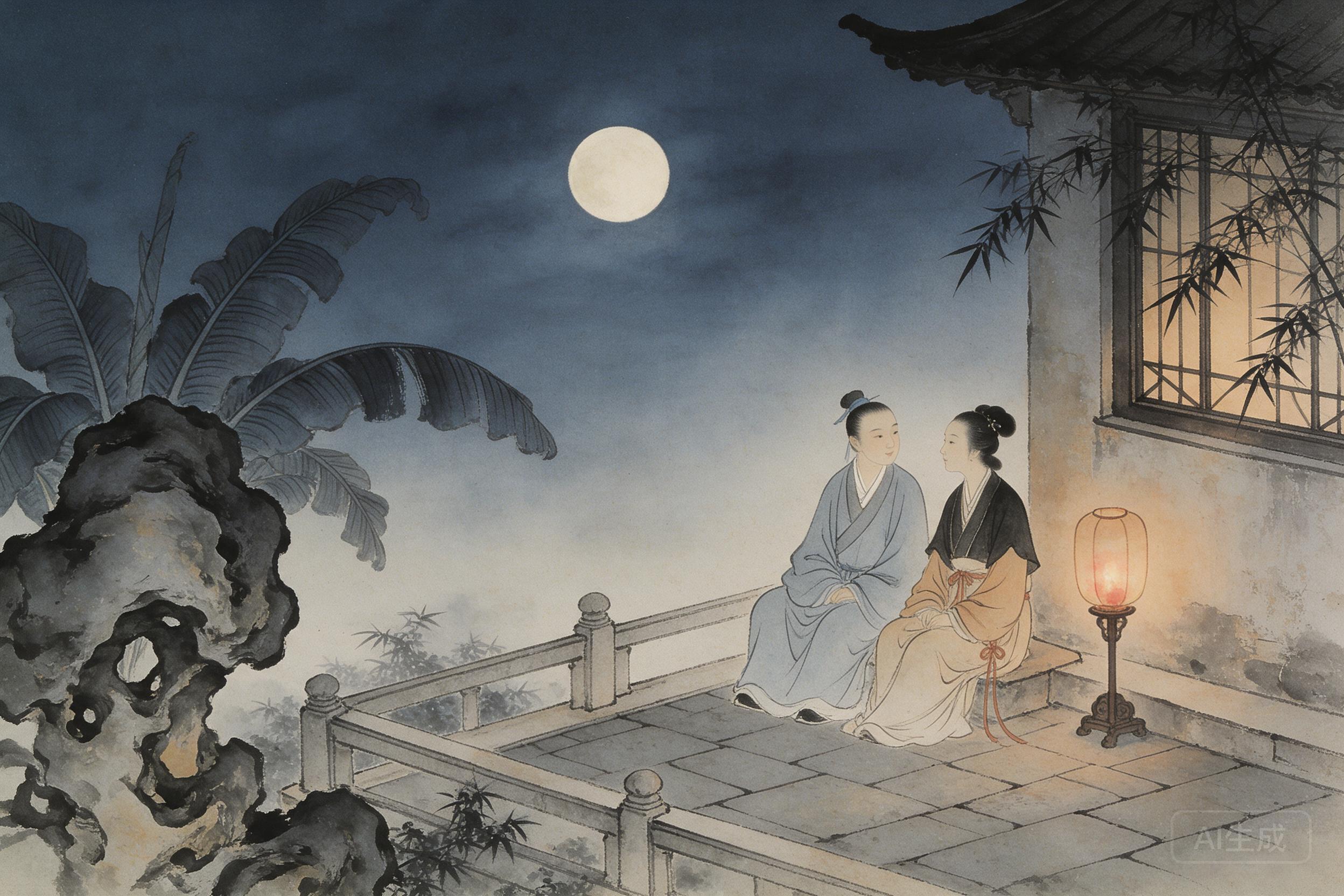
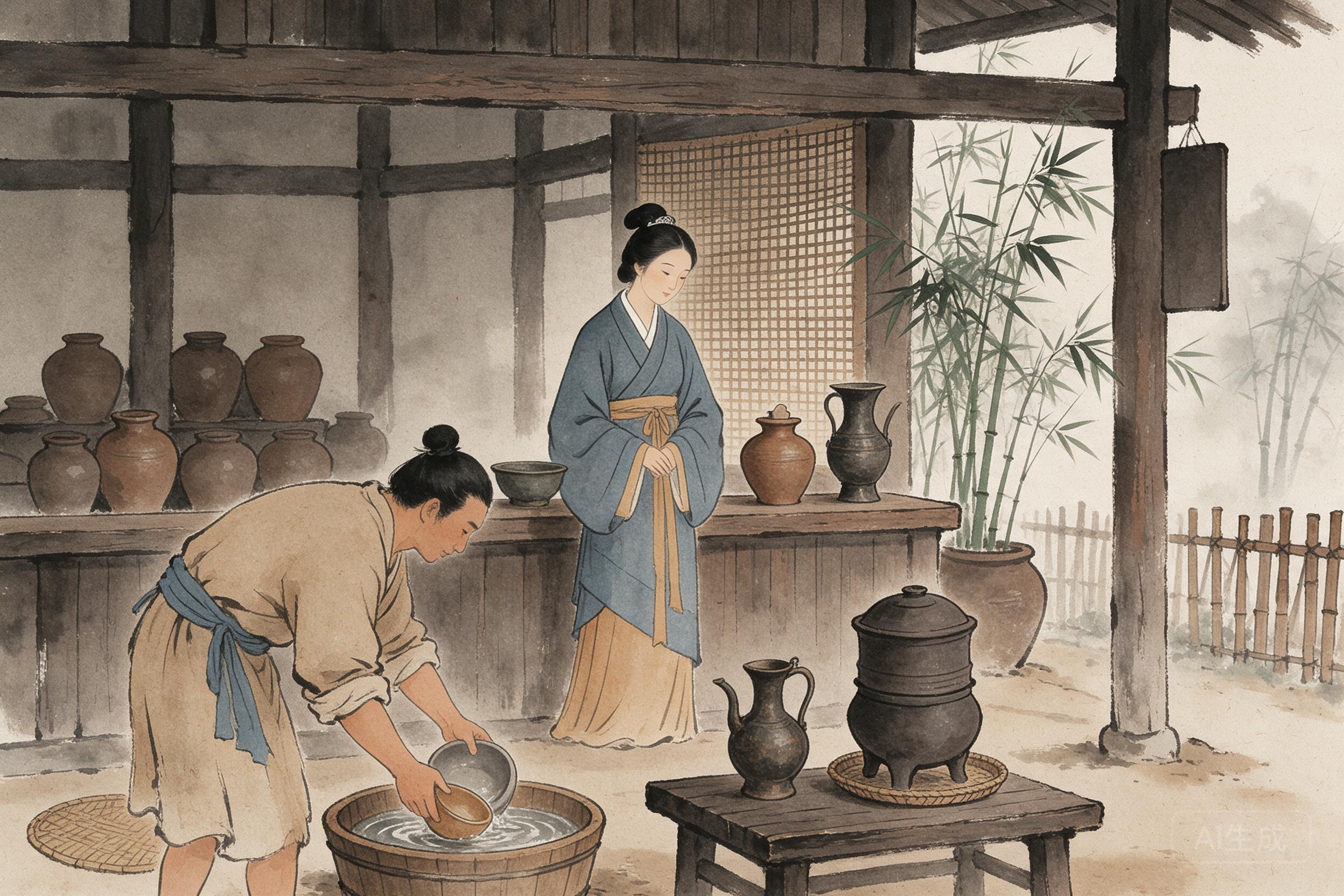
In second-century BCE Linqiong, a widow heard a qin across a banquet hall and left with the man who played it. The earliest full account is in Sima Qian's Shiji, and it says nothing about the songs later attributed to her.
The story rests on three texts of different kinds. The Shiji, the earliest, gives the qin, the night flight, the wine shop and her father's money, and no poem at all. The Xijing zaji, a collection of anecdotes compiled centuries later and traditionally ascribed to Liu Xin, adds one sentence about a Mao Ling woman and a song. The Yutai xinyong, a sixth-century anthology, prints that song without an author. The lyrics of Fengqiu Huang and the "digit poem" have no verifiable early text and are not quoted here.
A Banquet in Linqiong
Linqiong lay west of Chengdu, in the salt country, and its rich men counted wealth in servants: the Shiji gives Zhuo Wangsun eight hundred. The magistrate was Wang Ji, an old friend of Sima Xiangru, a poet with no income and one long rhapsody to his name. Zhuo Wangsun was the richest man in the county; the two are different people.
Wang Ji called on Xiangru daily with exaggerated deference until the rich families decided the visitor was worth entertaining. They gave a feast. At midday Xiangru sent word he was ill; Wang Ji would not touch the food, fetched him in person, and the company was struck.
Wine, then a qin. He declined, then played once or twice. Wenjun, newly widowed, loved music, and watched from behind a door: pleased, the Shiji says, and afraid she would not be thought his equal.
What the Shiji Actually Records
> 是時卓王孫有女文君新寡,好音,故相如繆與令相重,而以琴心挑之。……文君夜亡奔相如,相如乃與馳歸成都。家居徒四壁立。
> At that time Zhuo Wangsun had a daughter, Wenjun, newly widowed and fond of music; so Xiangru pretended to value the magistrate and courted her with the heart of his qin. … Wenjun fled by night to Xiangru, and he galloped away with her to Chengdu. At home there were only four walls standing.
He sent gifts to her maids first; she left at night; they rode to Chengdu; the house had four walls and nothing else. Her father said he would not kill her, and would not give her a single coin.
There is no song here. The qin appears once, as method. Wenjun's only speech comes later: let us go back to Linqiong; a loan from my cousins would keep us; why live like this. Her only interior detail is that she was pleased, and afraid.
The Wine Shop and Her Father's Money
They went. They sold the carriage and horses, bought a wineshop, and she stood at the wine jar while he, in a loincloth, washed cups among hired men. Her father's reaction has one word behind it: shame. He shut his gate.
A daughter selling wine in his own county was a statement about his conduct, and the clan elders said so: you have one son and two daughters; what you lack is not money; he is poor but able, and he is the magistrate's guest.
He gave way: a hundred servants, a million coins, her marriage clothes and bedding. They returned to Chengdu and bought fields and a house, and the Shiji calls them rich. The wineshop does not appear again.
The money arrived twice: years later, when Xiangru came back to Shu as an imperial envoy, her father brought cattle and wine and gave her an equal share.
A Song She May Not Have Written
> 皚如山上雪,皎若雲間月。聞君有兩意,故來相訣絕。……願得一心人,白頭不相離。
> White as snow on the mountain, bright as the moon between the clouds. I hear you have two minds; so I have come to take my leave of you. … What I want is one heart, one person, white hair and no parting.
It is a woman's speech to a man who has two minds.
In the sixth-century Yutai xinyong it is the fifth of six "ancient yuefu poems", with no author and no title but its first line: whoever compiled it did not know the poem as Zhuo Wenjun's. Its attribution to her rests on one sentence in a miscellany, quoted below.
Mao Ling and the Nameless "Concubine"
> 相如將聘茂陵人女為妾,卓文君作《白頭吟》以自絕,相如乃止。
> Xiangru was about to take a woman of Mao Ling as a concubine; Zhuo Wenjun wrote "Song of White Hair" to cut herself off from him, and he stopped.
That is the whole entry: no name, no family, no age. The Xijing zaji is a collection of anecdotes and marvels about the Western Han capital, not a history, traditionally ascribed to Liu Xin, an attribution long disputed, and compiled centuries after Sima Qian.
Mao Ling was not a rival's address. It was a tomb town northwest of Chang'an, in present-day Shaanxi, where Xiangru, released from office by illness, lived at the end of his life. The biography calls him a stammerer, rich through his marriage.
Its last scene has an envoy asking for his writings; his wife says he kept no copies, but left one roll. She is not named.
Reading the Layers
Three texts, three kinds of claim. The Shiji has the qin, the night, the wineshop, the settlement, and no poem by her. The Xijing zaji adds a rival and a poem in one sentence. The Yutai xinyong prints that poem anonymously. Fengqiu Huang and the "digit poem" belong to later literature; their texts cannot be traced to the Han, so they are named here, not quoted.
What the Han left is smaller than the story: a banquet, a flight at night, four bare walls, a wine jar, and the sum her father finally paid.
Sources & further reading
- Shiji 117: Sima Xiangru liezhuan (Chinese Wikisource)
- Xijing zaji, juan 3, item 85 (Chinese Wikisource)
- Yutai xinyong, juan 1, "Guyuefu shi" (Chinese Wikisource)
- Xijing zaji, book page (Chinese Wikisource)
- Yutai xinyong, book page (Chinese Wikisource)