Zhang Chang ran the capital region for nine years and was famous for catching thieves. He is remembered instead for a cosmetic brush, a single sentence in the Book of Han, and a wife the record never names.
The source is the biography of Zhang Chang in juan 76 of the Book of Han (Han shu), compiled by Ban Gu in the first century CE; quotations follow the Wikisource transcription of the received text, and the translations are mine. The phrase 眉憮 is also transmitted as 眉嫵, which is how it is read here, as 'charming'. The story that his wife's brows were scarred in childhood, and that he painted over the scar out of tenderness, appears in no Han source and is identified in the article as later embellishment. His wife is never named in the biography. Zhang Chang's death in 48 BCE and his tenure as jingzhao yin, 'metropolitan governor', from 61 to 53 BCE follow the same biography and the standard list of holders of the office.
A Husband with a Brush
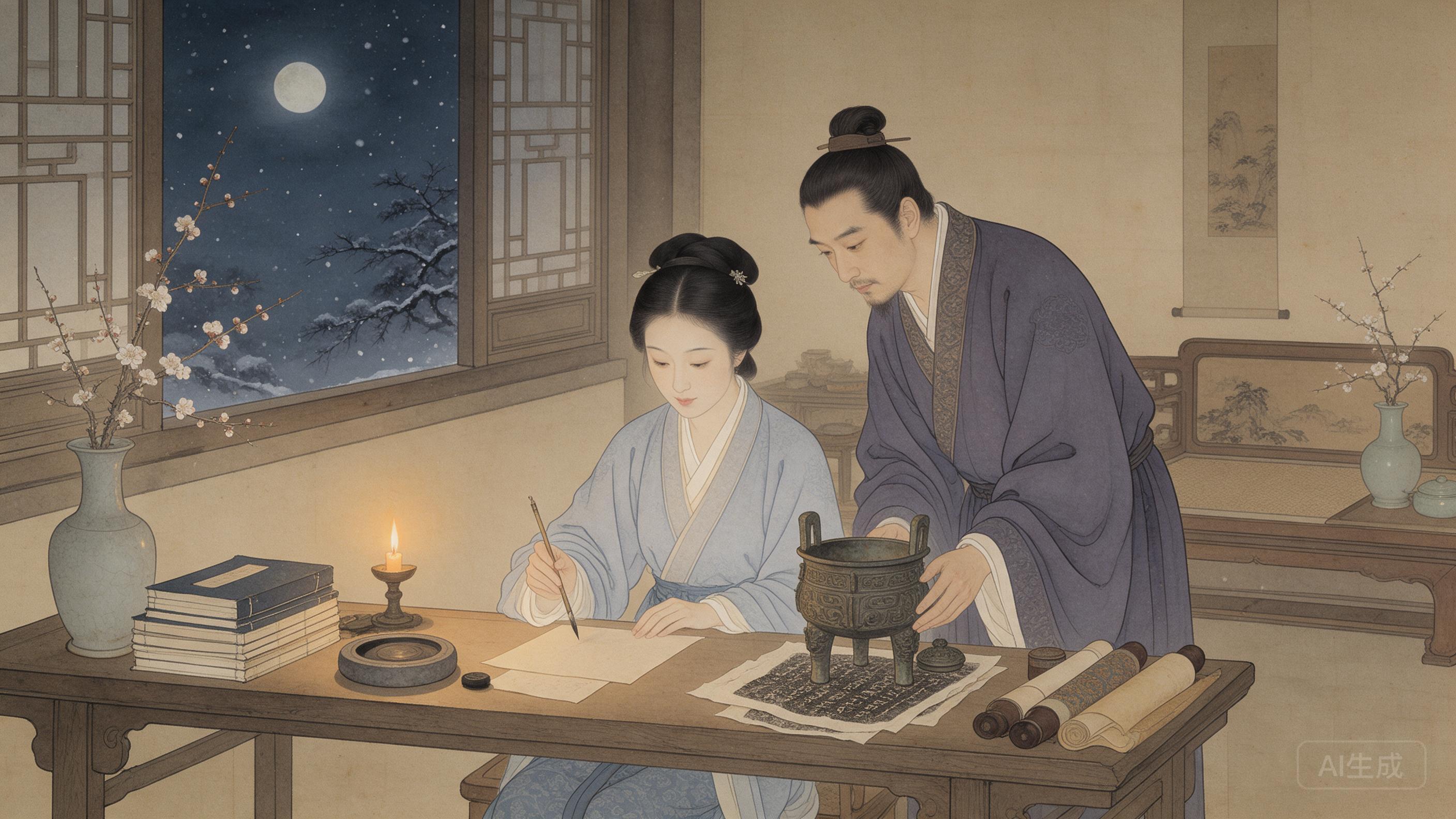
Zhang Chang (d. 48 BCE), whose family had moved from Pingyang to Maoling, later settled at Duling; both are near the imperial capital. His career was long and loud: he remonstrated with Liu He, the young man installed and deposed as emperor in 74 BCE; he governed the eastern kingdom of Jiaodong; and for nine years he was metropolitan governor of the capital region, jingzhao yin. Today he is remembered for something much smaller: he painted his wife's eyebrows.
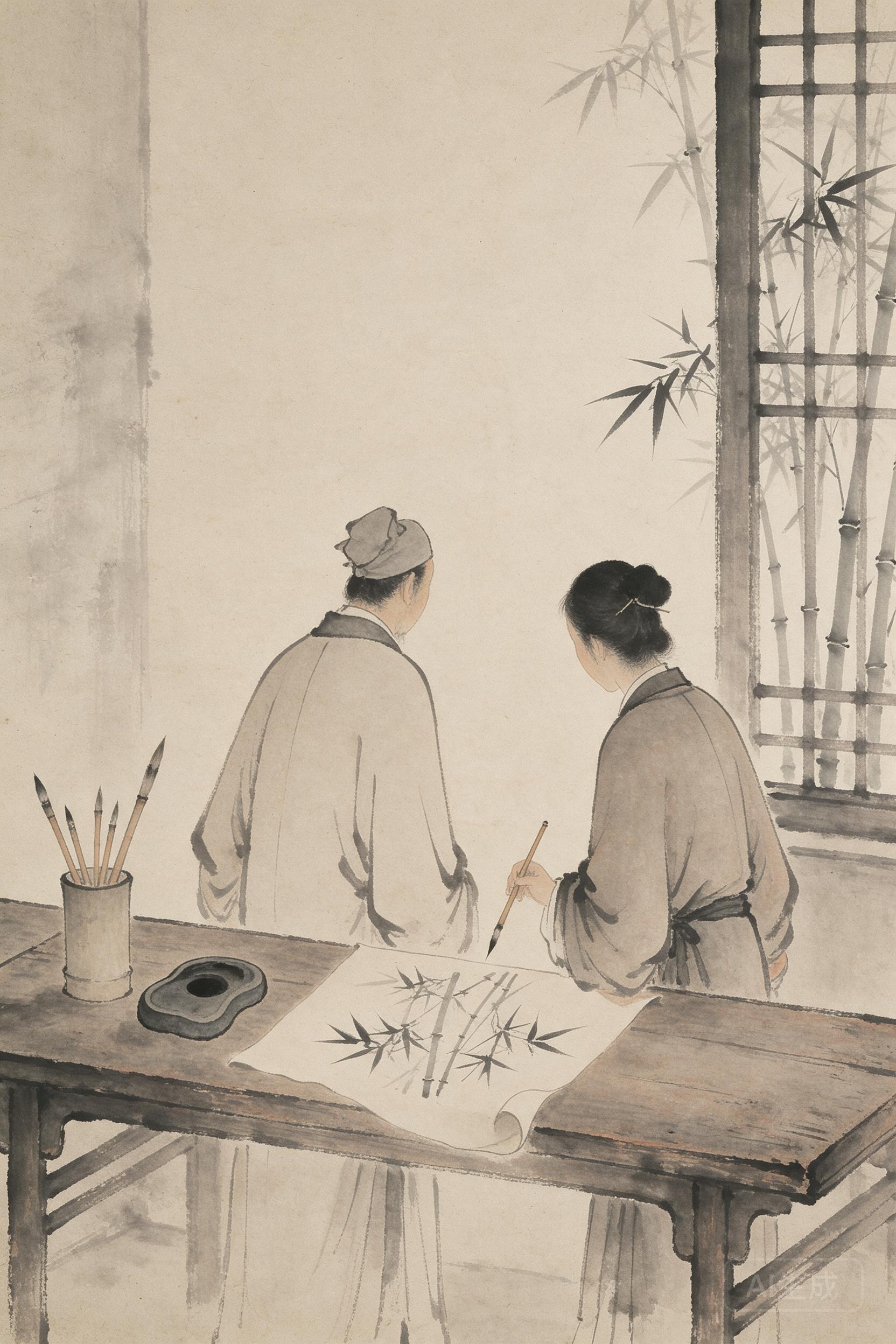
That is almost all we know of her. She has no name in the Book of Han, no family, no age, no quoted words. She appears in one clause of the biography her husband shares with five colleagues — 又為婦畫眉, "and he also painted his wife's brows" — and everything else about the marriage must be read out of the stir that clause caused.
The Man on Zhangtai Street
Ban Gu's Book of Han, compiled in the first century CE, is not a tender book, and Zhang Chang's chapter is mostly about catching thieves. Yet the same page holds one of the most human scenes in the dynastic histories. After court sessions he would not ride in proper state. He had a clerk clear the road and went down Zhangtai Street — a name later generations used for the singing-girl quarter — tapping his horse along behind a 便面, the hand-screen a Han gentleman raised to keep from being recognised. He had no dignity, his critics said; the history's verdict is terser: 無威儀, "he lacked bearing."
The joke shows a hard administrator who did not care what the street thought. The appearance he did care about was his wife's.
"More Intimate Than Painting Brows"
"The officials" — the text does not say who — reported the eyebrows to the throne. In the capital people had begun to speak of "Lord Zhang of the capital's brows" (張京兆眉憮), a phrase for brows beautifully drawn. Emperor Xuan asked him about it.
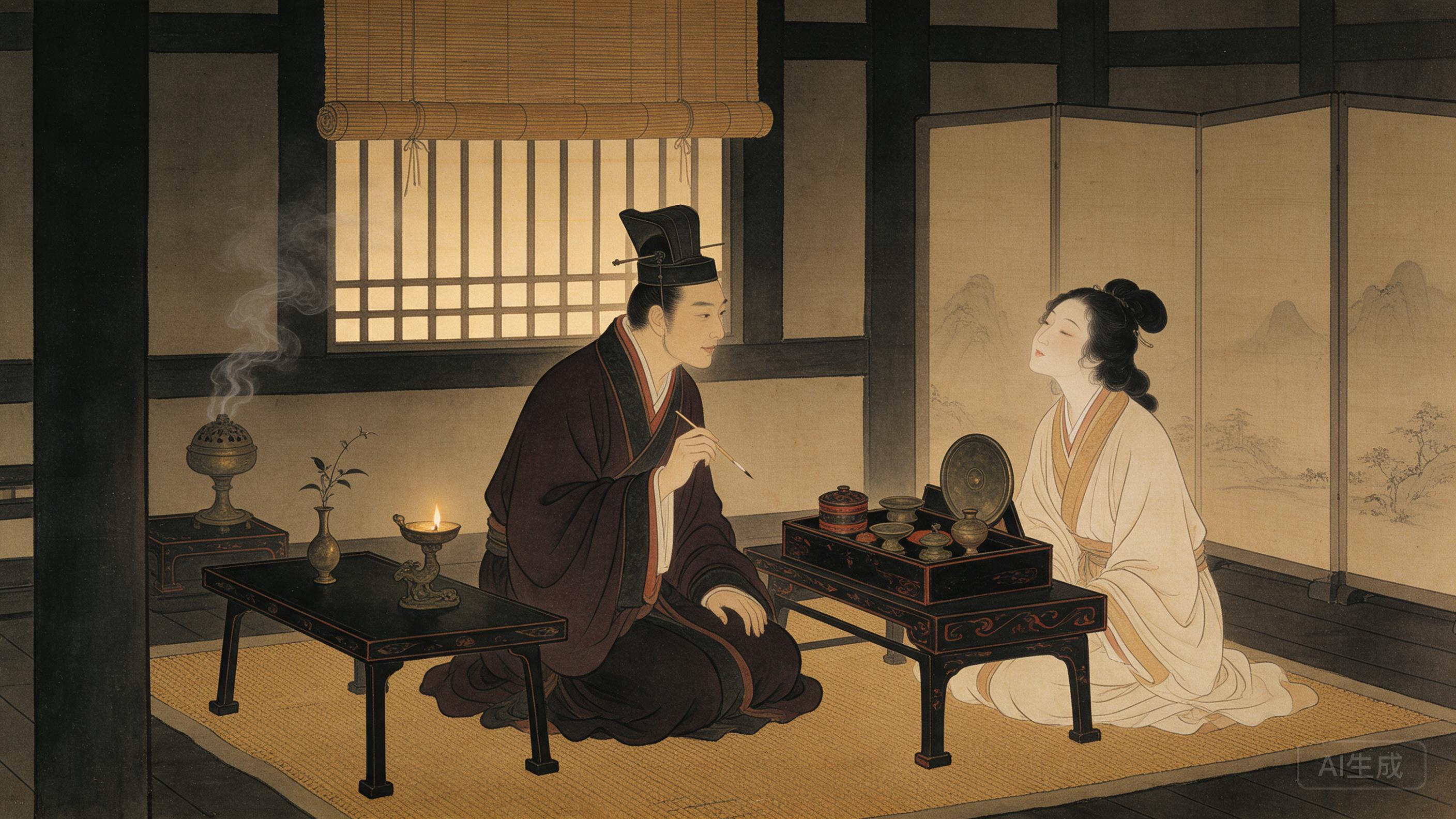
The reply is one of the famous sentences of the Han corpus: 臣聞閨房之內,夫婦之私,有過於畫眉者 — "I have heard that within the women's quarters, between husband and wife, there are things more intimate than painting brows."
The emperor, the history says, admired his ability and did not reprove him fully (上愛其能,弗備責也). But the same passage ends on a colder note: 然終不得大位, "yet in the end he never reached high office."
Nine Years, Five Days
The rest of the biography explains why the brows mattered. He inherited a capital where governor after governor had failed and organised theft was ruining the markets. He broke it by summoning the thieves' chiefs, pardoning them, making them clerks, and letting them mark their own men with red ochre, so that wardens seized hundreds in a day. He ran the capital for nine years, outlasting every recent predecessor. Then his friend Yang Yun was executed for treason; his associates were dismissed, but the memorial naming Zhang Chang was shelved. A subordinate, Xu Shun, judged his superior finished, called him "five days' governor" (五日京兆) and quit the case. Zhang Chang jailed him; officers questioned him day and night, and the case ended in a death sentence. The winter execution month was over when Zhang Chang sent a clerk to mock him, then had him executed in the marketplace. The emperor, unwilling to press the killing, first handed down the earlier Yang Yun charge and reduced him to commoner; Zhang Chang gave up his seal at the palace gate and went into hiding for months, until the emperor, needing able men, recalled him. On the way he impeached himself at the public carriage office, admitting he had 枉法以誅之, "bent the law to put him to death," and was made governor of Jizhou, later administrator of Taiyuan. He died of illness soon after Emperor Yuan took the throne.
What the Record Leaves Out
So the man with the brush was also a magistrate who could have a clerk killed for a sneer, and who kept the capital by bargaining with gang bosses.
What did not survive is her side of it. We do not know whether she asked him to paint her brows, whether they were thin or uneven or scarred. Later retellings supply a reason: that she was injured as a child, and that he painted over the scar out of kindness. It is a lovely story, and no Han source contains it; it belongs to the tale's afterlife, not to the Book of Han. Nor is she a heroine like Zhuo Wenjun or Liu Lanzhi: she never speaks, never chooses, never gets described. She is remembered because someone wrote down that her husband touched her face.
From that one clause, 張敞畫眉, "Zhang Chang painting brows," became an idiom for a husband's affection, and the image has outlived his policies by two thousand years. The empire remembered its thief-taker for his brush.
Sources & further reading
Editorial approach