Wang Zifu sees a girl holding a plum branch at the lantern festival, loses his appetite entirely, and follows a cousin's invented directions to a house that should not exist. Pu Songling's tale tells a love story through laughter, and through what happens when it stops.
Pu Songling (1640–1715) wrote Strange Tales from a Chinese Studio over several decades; the collection was first printed in 1766, long after his death, from manuscripts that had circulated by hand. Our text follows the version of “Yingning” in volume two as collected by Chinese Wikisource, and the English is our own translation. Yingning is often called a fox story, but the girl is not simply a fox: she says she was born to a fox mother who left her, and was raised for more than ten years by a ghost mother, so both layers of her origin matter. Nothing here is offered as history. The tale is a work of literary imagination, built out of legend and a storyteller's craft, and should be read as such.
A Lantern Festival Flower
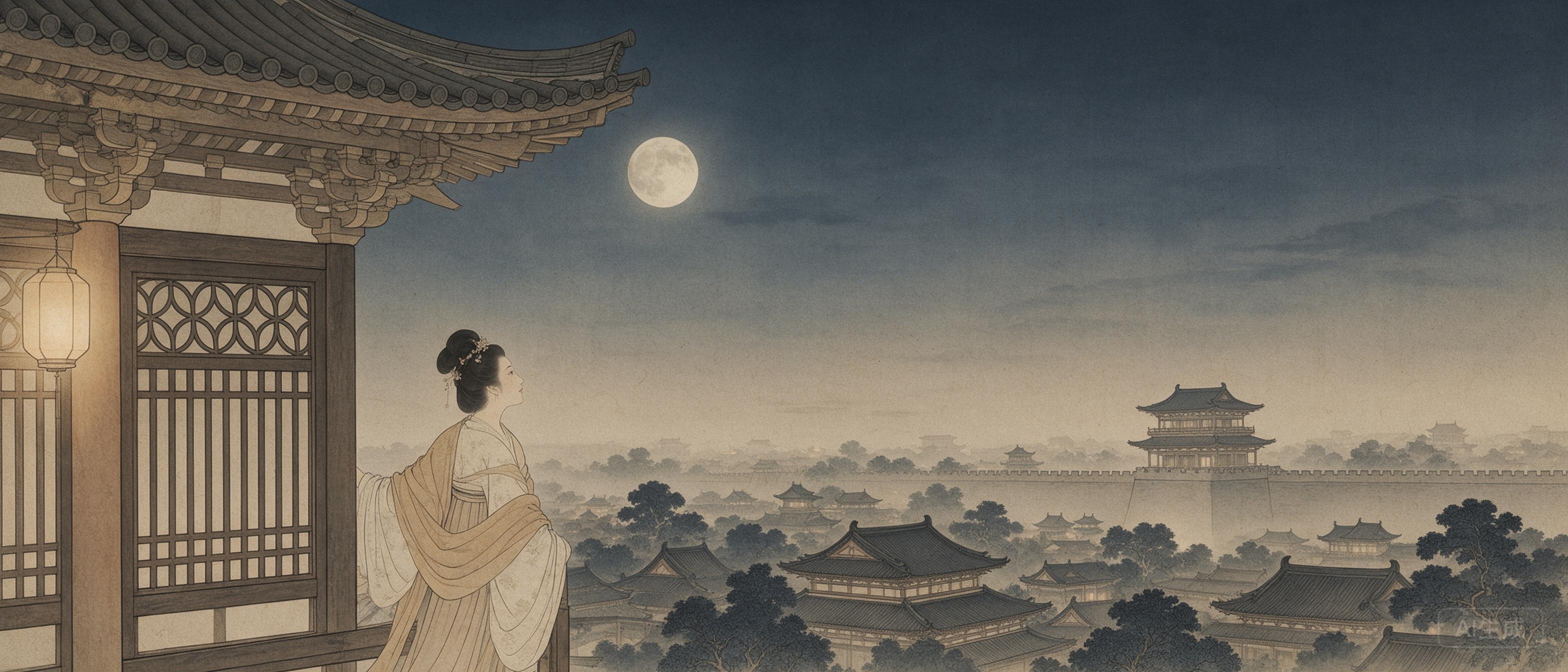
On the fifteenth night of the first month in Ju county, the young scholar Wang Zifu went out to see the lanterns. His father died early, and he had entered the district school at fourteen; a girl of the Xiao family had been promised to him, but she died before the wedding. In the street he met a girl with a maid, holding a branch of plum blossom. She was laughing — not a well-bred half-smile, but delight rising from the bottom of her nature. She told her maid that his eyes were bright “like a thief's,” dropped the branch on the ground, and walked away laughing.
Wang picked it up. At home he hid it under his pillow, lay down with his head hanging, and neither spoke nor ate. The branch was never a token she gave him; it was what her hand let fall, and he treasured it as a pledge, misreading the story from its first step.
Longing and a Lie
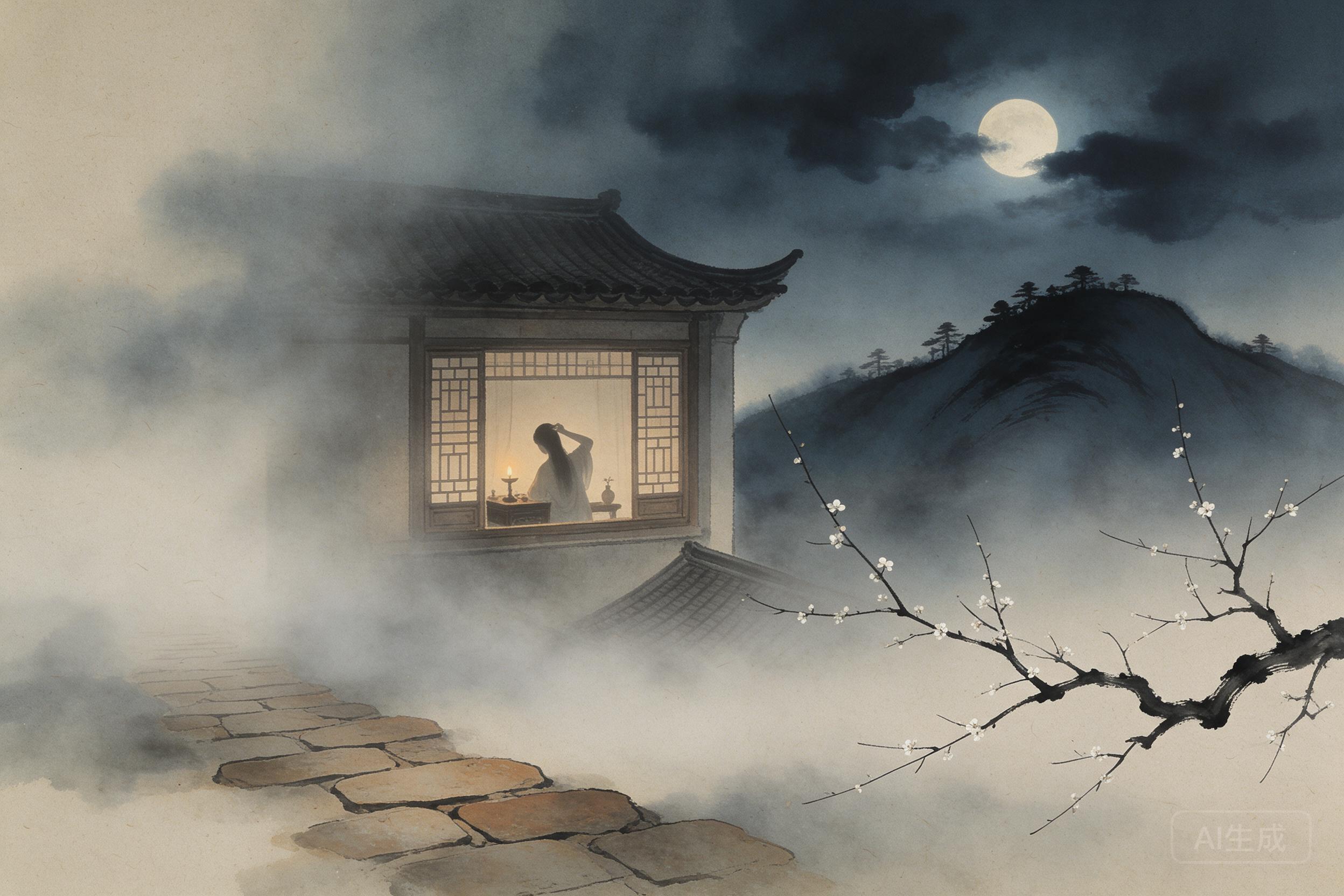
His cousin Wu came to ask after him, guessed the cause, and to comfort him invented a family: an aunt thirty li away in the southwestern hills, with a daughter at home. Wang believed him and went alone, and found the village, the gate, and the girl. His mother dismissed the tale: “I have no sister; how could I have a nephew?” Wu did not argue; later he went to look for the road himself, and the text says only what he found: “the huts were quite gone.”
The place is not a haunted dwelling but the residue of a kind lie — a real gate on a road that could not be found twice. In a story so full of laughter, the plot is moved by a kind falsehood, and the tale does not punish it. In the garden Wang later shows that withered branch as his evidence: the flower dried, and he could not throw it away.
The Garden
Outside the gate Yingning laughed helplessly; pushed indoors, she covered her mouth and still could not stop, and a scolding only made her stand holding the laugh in. The old woman who raised her said that at sixteen she was “silly as a baby.” In the garden Wang declared himself, and she knew nothing of the difference between a husband's love and a kinsman's. When he came near, she said, “I am not used to sleeping with strangers.” Then, before the old lady, she repeated his request exactly: “Eldest Brother wants to sleep with me.” It is funny because she does not know what she has said, and painful because Wang does.
Her silliness is not stupidity but freedom: where she grew up, nobody taught a girl what to hide.
The Wedding and Two Mothers
The wedding was nearly undone by laughter. During the rites she laughed until she could not bow or lift her head, and the ceremony was abandoned: “she laughed till she could not bend, and so it ended.” A wedding is a set of gestures performed for others, and she overturned it on entering — not in defiance, but because she could not see why one must not laugh. Asked about her origins, she gave the withheld answer: “I am born of a fox. When my mother left, she entrusted me to a ghost mother, and we stayed together more than ten years.” The fox mother gave birth and went; the ghost mother raised her and stayed. One layer gave her a human body, the other a childhood without human rules.
The Laughter Taken Back
A neighbour's son saw her laughing over the wall and took it as encouragement for himself. She pointed, laughing, at the foot of the wall; he read it as a tryst and went at dusk, and a scorpion hidden in a dead tree stung him. He died that night, and his family brought a lawsuit. Her mother-in-law's words are the heaviest in the tale: “Everyone laughs, but it must be at the right time.” Afterwards Yingning never laughed again; they teased her and she did not laugh, yet “all day long she never once wore a sorrowful face.” The laughter had not turned to grief; it had sunk out of sight.
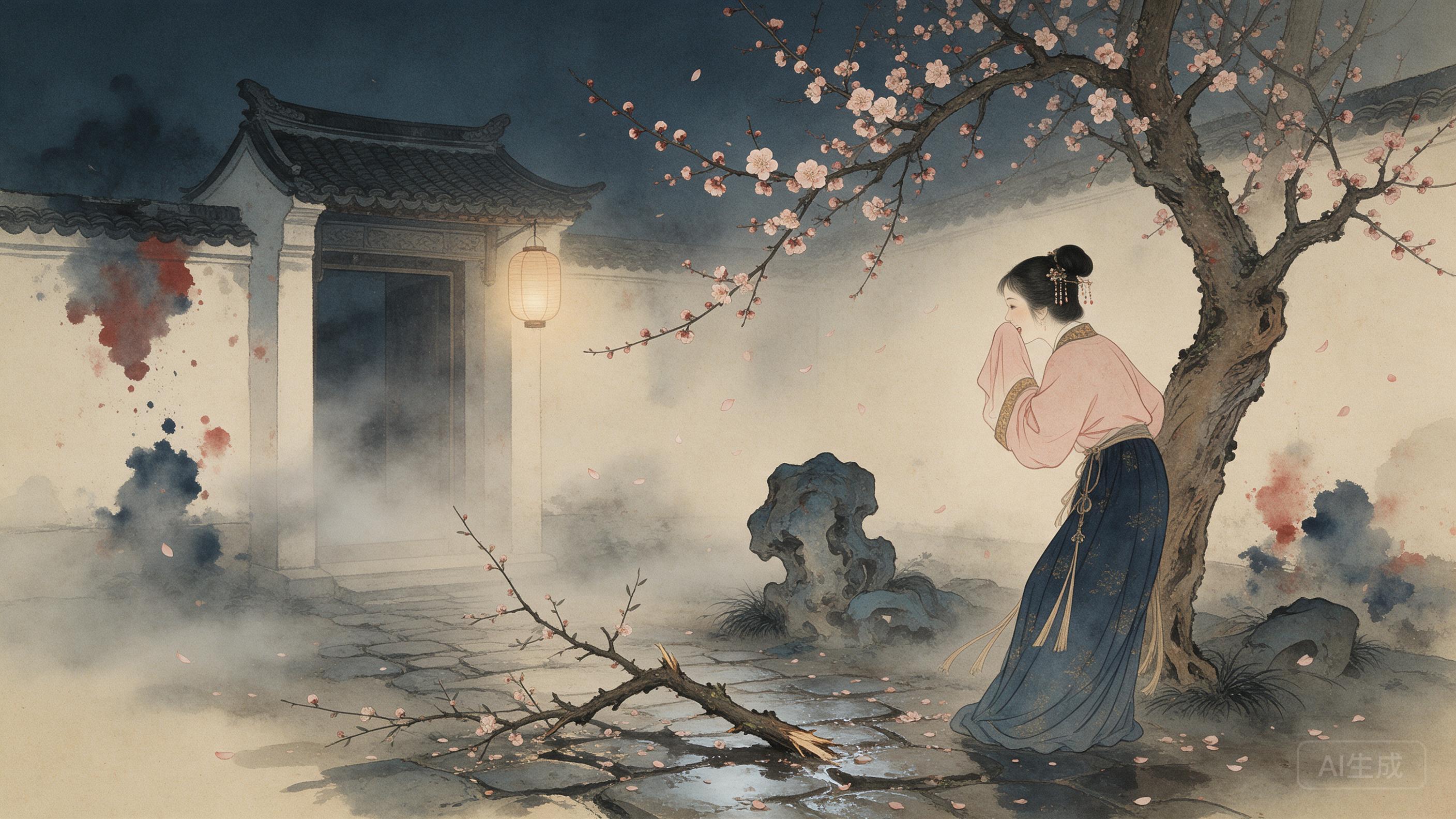
At the end she weeps and reburies the ghost mother. Laughter was where she hid; tears are where she comes out. She bears a son who laughs at everyone, very much like his mother, and the author writes: “My Yingning has hidden herself in laughter.” She is not a girl who laughs because she is happy; she made laughter her hiding place.
Sources & further reading
Editorial approach