In the Wei court of the third century, a celebrated arguer married for beauty, said so in public, and then lost his wife to illness. What he did in the courtyard that winter has outlasted everything else he said.
The core evidence is a single anecdote in the "Infatuation" (Huoni) chapter of the Shishuo xinyu, together with Liu Xiaobiao's commentary quoting a lost biography of Xun Can, and He Shao's biography of him quoted in Pei Songzhi's commentary to the Sanguozhi. Neither source records his wife's personal name or her age; the article accordingly leaves both unstated. The quoted acts and words follow these sources; the reflective closing and the reconstruction of the scene's emotion are the author's own reading, not recorded detail.
The Courtyard in Deep Winter
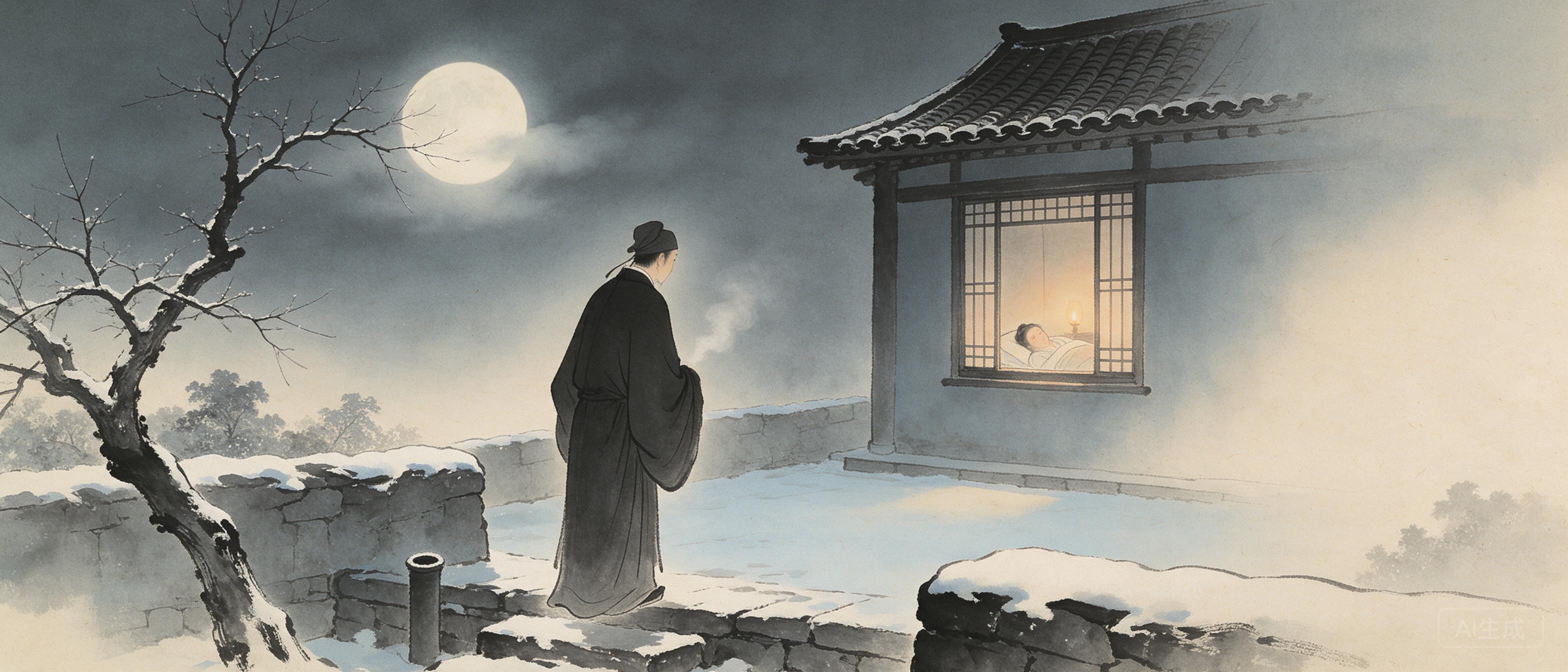
The scene fits in a single breath. It is deep winter in the third century, and the wife of Xun Can is burning with fever. He walks out into the courtyard, stands in the night air until his own skin is chilled through, then comes back inside and presses his body against hers to draw the heat down. The fifth-century anthology *A New Account of the Tales of the World* (Shishuo xinyu) gives the whole act one sentence, with no comment on medicine, no comment on manners, and then supplies the ending: his wife died, and he followed her soon after. For this, the text says dryly, he was mocked by his contemporaries.
A Son Who Argued With Everyone
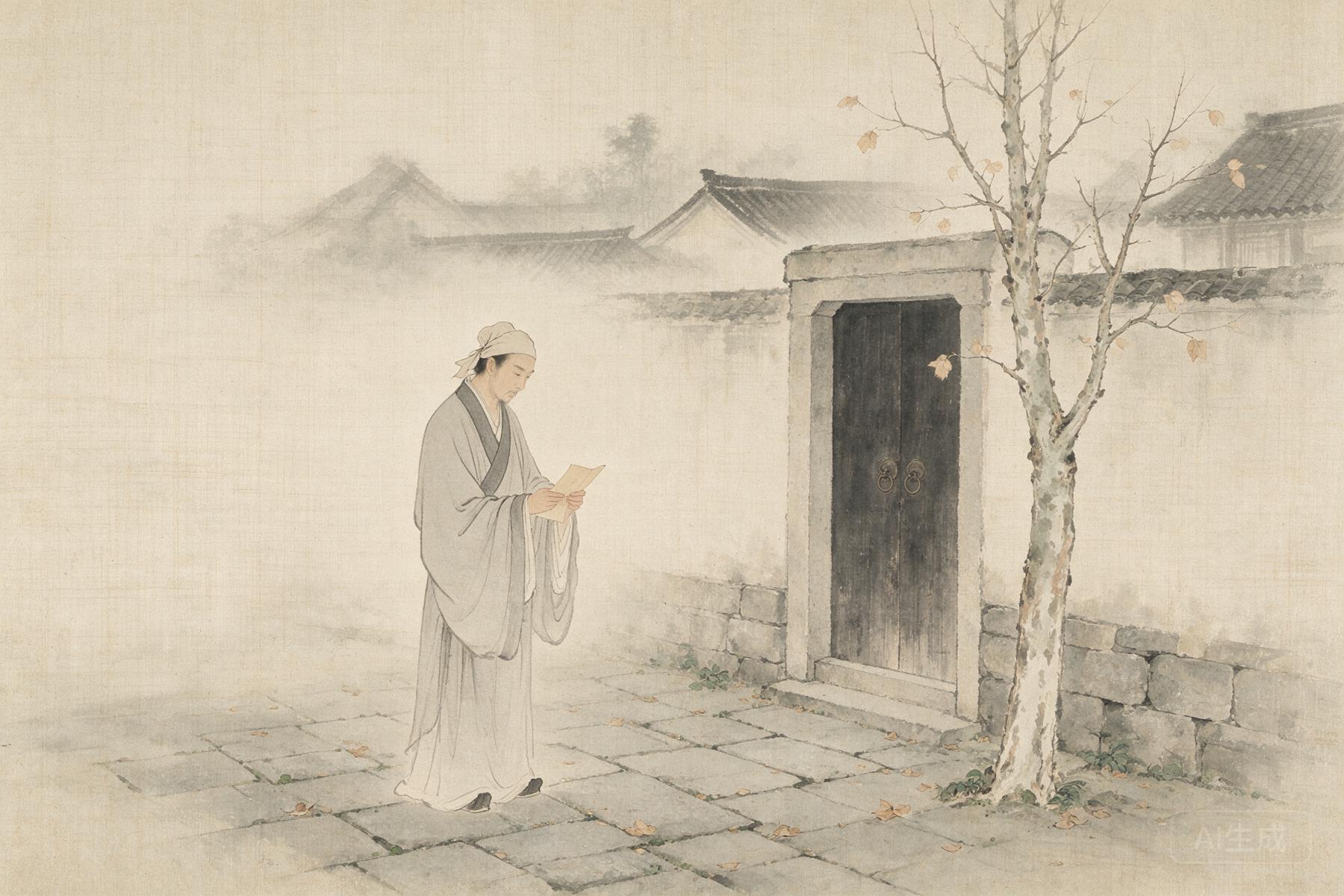
Xun Can, courtesy name Fengqian, was a son of Xun Yu, the strategist who served Cao Cao, and he grew up in the most intellectually self-conscious generation of the Wei court. His elder brothers debated Confucian learning; he preferred talk of the Way, and pushed an uncomfortable conclusion: if Confucius's words on human nature and the Way of Heaven were never really heard, then the Six Classics, though they survive, are only the husks of the sage. He argued the point with a brother who challenged him and could not be moved from it. He also rated his own father below an elder cousin and said so, which angered his brothers and changed nothing.
Early in the Taihe era, around 227, he came to the capital and argued with Fu Gu, a master of logical names and principles, until Pei Hui smoothed the way between them and the two became friends. Xun Can was also close to Xiahou Xuan, and told both men plainly that in public achievement they would surpass him, but in insight they fell short. He was aloof, kept few acquaintances, and counted as company only the outstanding men of his age.
"Beauty Should Be the Standard"
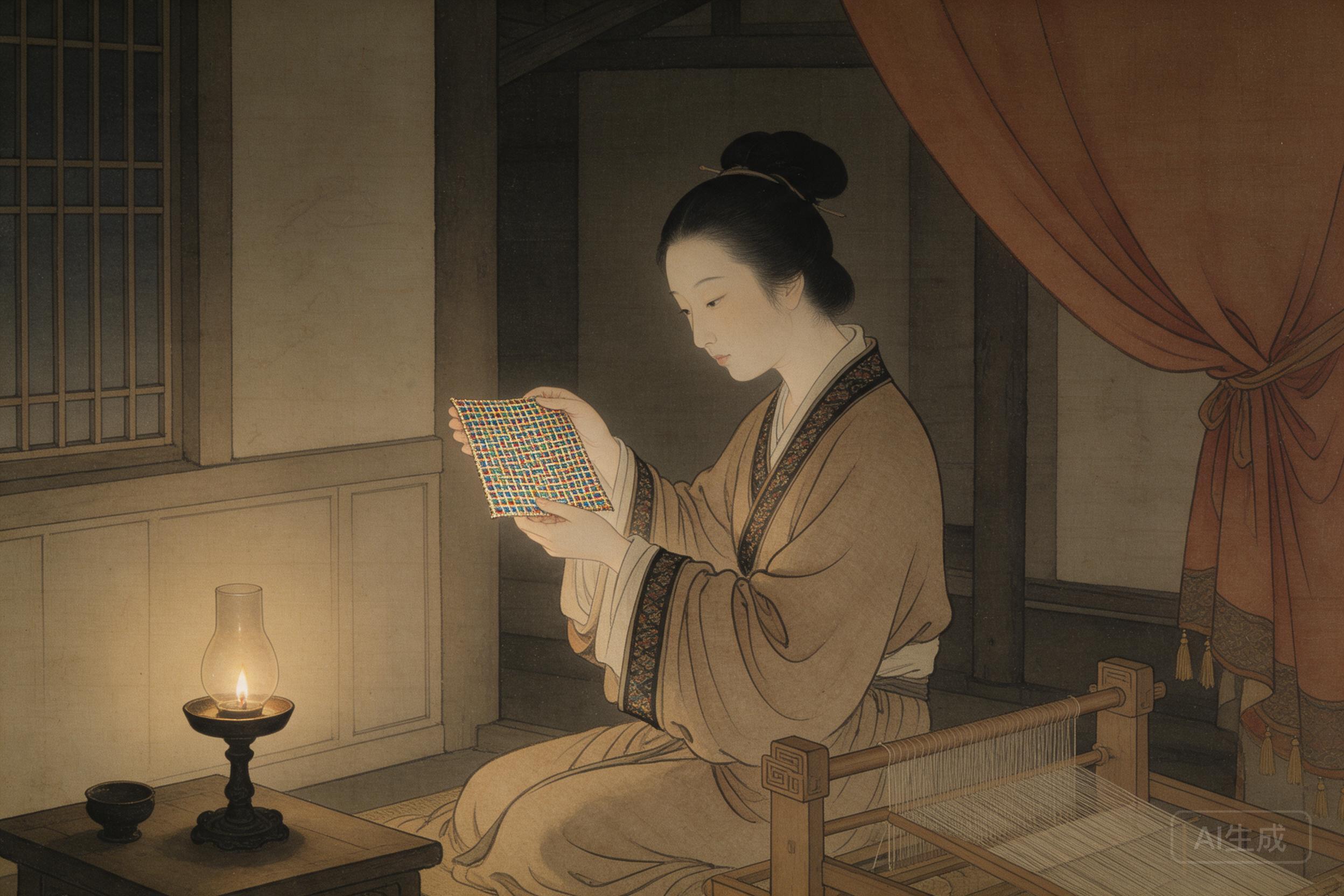
His opinions about marriage were as blunt as the rest. Xun Can held that a woman's talent was not worth discussing, and that beauty should be the deciding measure. He married the daughter of Cao Hong, a cavalry general, and the record grants her the word "beautiful"; her clothes, her curtains and hangings were magnificent, and he kept her rooms and her company to himself. Modern readers flinch here, and the source does not help him: the same man who dismissed women's minds chose a wife for her looks and said so in public.
"A Fine Woman Is Hard to Find Again"
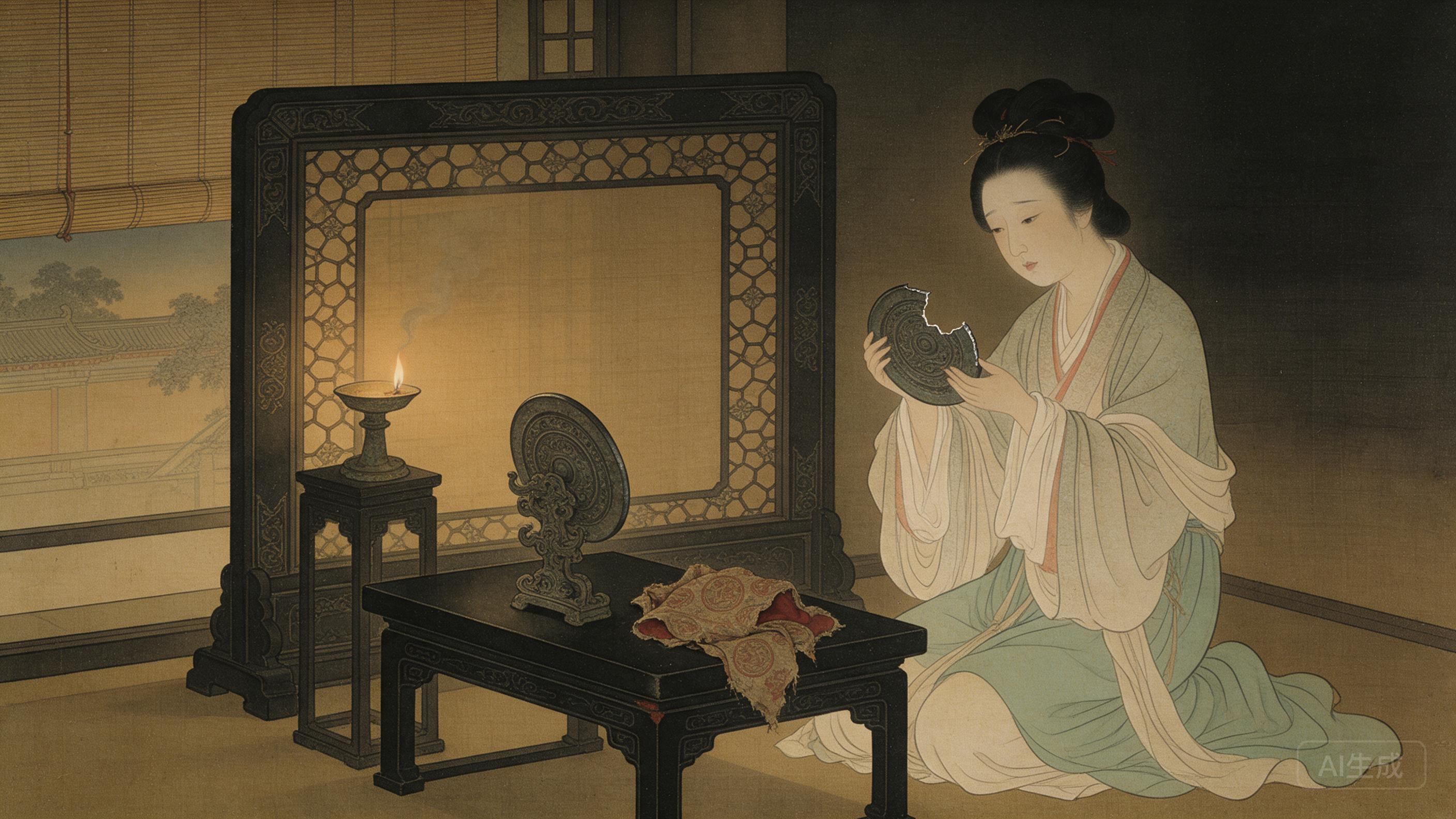
Then she fell ill and died. Before the coffin was sealed, Fu Gu came to offer condolences and found him not weeping but visibly undone. Fu Gu put the hard question: talent and beauty rarely meet in one person; you let talent go and kept beauty, which is easy enough to find, so why grieve like this? Xun Can answered, "A fine woman is hard to find again. She had no beauty that could topple a city, but she was not easy to come by." He could not stop mourning. A little over a year later he died, aged twenty-nine. At his burial only about a dozen people came, all well-known men of his generation, and their weeping was enough to move strangers in the street.
Why the Editors Filed It Under Infatuation
The compilers of *A New Account* placed the story in the chapter called "Infatuation," the section for men who lose themselves in attachment, and added that he was ridiculed for it. The same passage preserves his maxim that a woman's virtue is not worth praising and her beauty should decide everything, followed by the judgment of a senior figure: that was a remark thrown out in a moment of feeling, not the words of great virtue, and later readers should not mistake it for wisdom. That gloss is how the tradition tried to save him. The doctrine is indefensible; the act in the courtyard is not a doctrine at all. The Ming anthology *History of Love* still collected him in its chapter on love's fools. What the sources actually preserve is not a model marriage but a man whose body understood what his philosophy could not say: winter cold, held against a fever, because it was the only help he had.
Sources & further reading
Editorial approach