The idiom ju an qi mei, "raising the tray level with the eyebrows", is still used for a marriage of mutual respect. Its earliest surviving source is a single sentence in the Book of the Later Han, in a chapter about men who refused office — not about wives at all.
Source and version: the narrative follows Fan Ye's Book of the Later Han (後漢書, completed c. 445), chapter 83, "Biographies of Recluses" (逸民列傳), the life of Liang Hong, in the Wikisource text. The closing remark of Ma Lun comes from chapter 84, "Biographies of Women" (列女傳). Wording that matters is quoted in the original Chinese with English paraphrase; all translation is ours, and the "Song of Five Sighs" is rendered line by line with its refrain kept.
A Coffin Wrapped in Matting
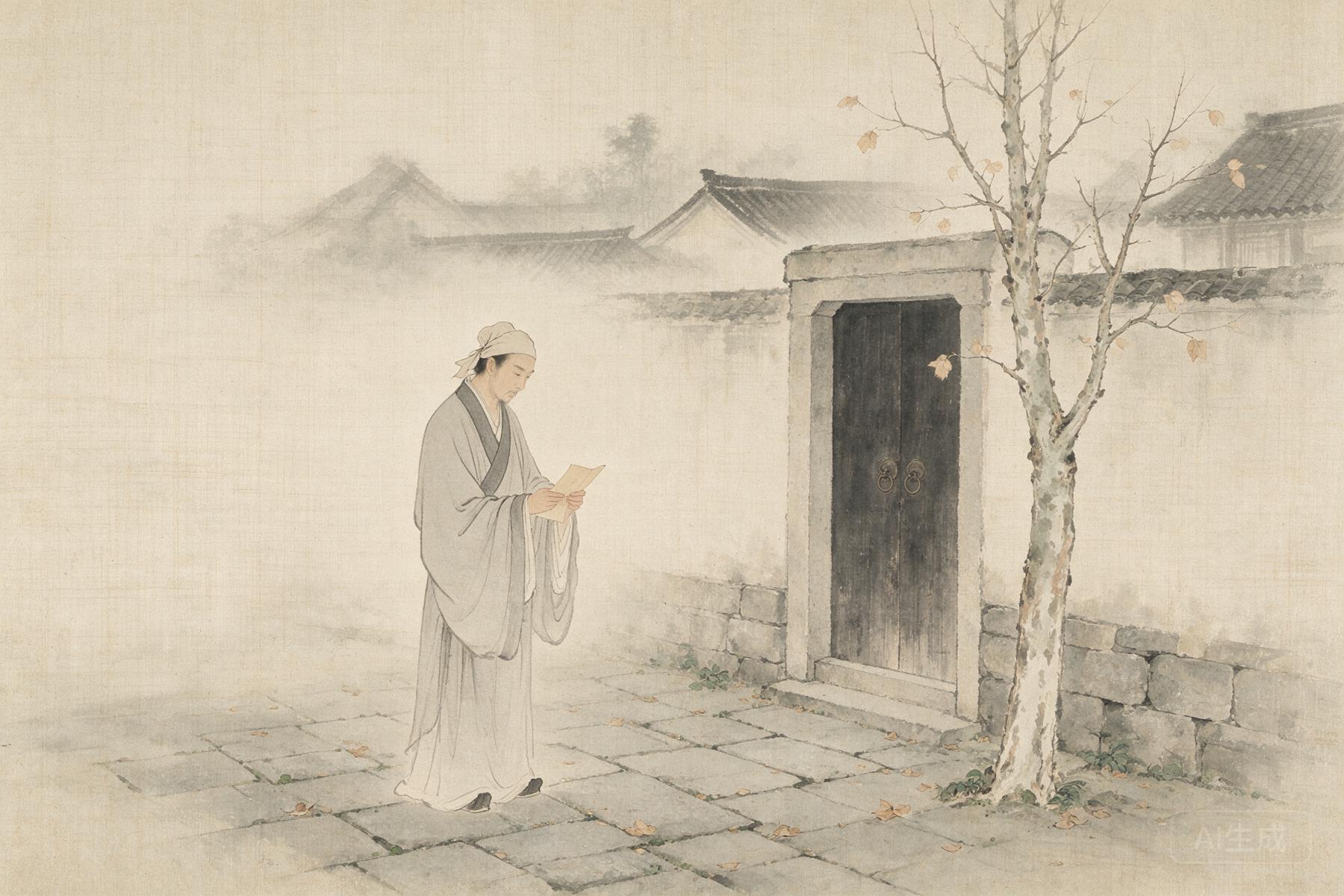
Liang Hong (梁鴻), styled Boluan (伯鸞), came from Pingling in Fufeng. His father, a colonel of the city gates under Wang Mang, died far from home in Beidi, leaving nothing; the boy buried him rolled in a mat. At the Imperial Academy he read widely but would not be bound to chapter-and-verse scholarship — refusing the specialism that led to office. After his studies he herded pigs in the Shanglin park. A fire he had set carelessly spread to a neighbour's house; he offered all his pigs in payment, and when the owner said it was not enough he worked off the balance until the elders of the quarter reproached the man and the pigs were returned. Liang Hong went home without them.
The Woman Who Set Her Own Terms
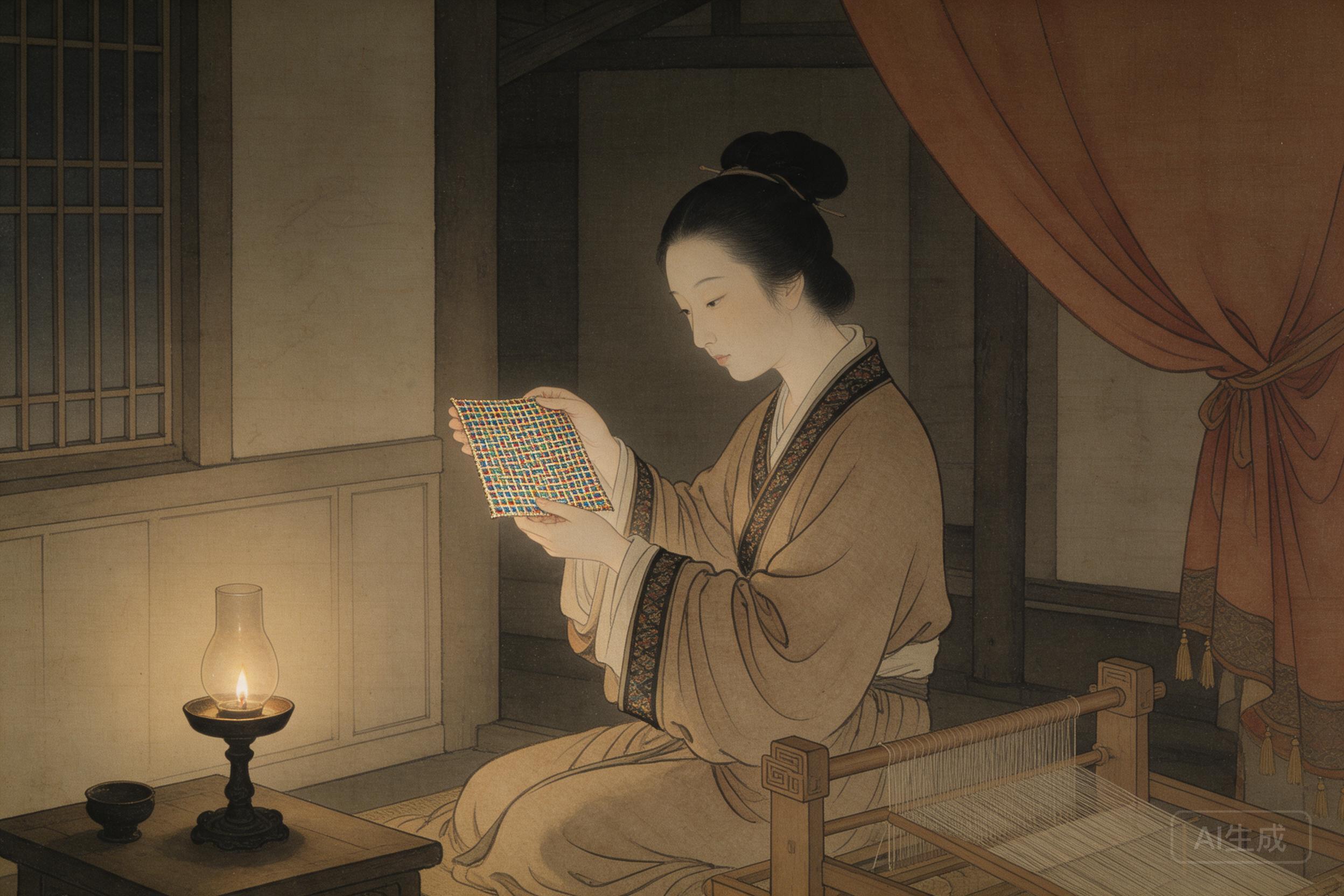
In the same county a daughter of the Meng family — stout, dark, strong enough to lift a stone mortar, in the historian's unflattering description — turned down every match until thirty, and when her parents asked why, she said: "I want a husband as worthy as Liang Boluan." He heard of it and sent betrothal gifts. She asked for plain cloth, hemp sandals, and the tools of spinning. On the wedding day she arrived dressed and painted, and for seven days he did not answer her. Kneeling by the bed she asked her fault. "I wanted a woman in coarse cloth who could go with me into the mountains," he said. "Now you come in silk and powder." She replied that she had only been testing his resolve and had her own clothes for a hidden life; she changed into a plain jacket, bound her hair in a conical bun, and came forward to work. He was delighted: "This is truly Liang Hong's wife. She can serve me." He gave her the courtesy name Deyao, Shining Virtue; her name was Meng Guang.
A Song with Five Sighs
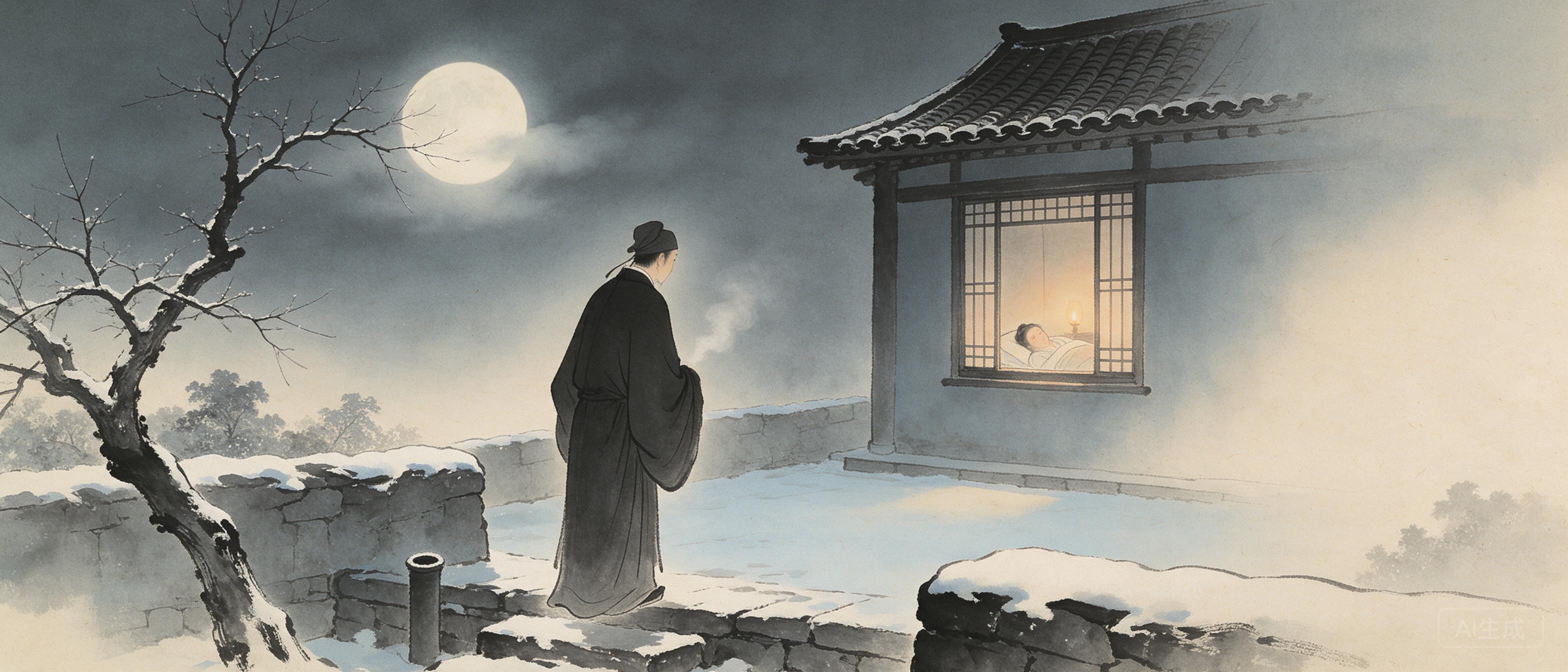
She pressed him: "I have always heard you meant to withdraw from trouble. Why still silent — do you mean to bow your head and take service?" He said yes. They went into the Ba ling hills to farm and weave, reciting the Odes and playing the qin. He admired earlier recluses and composed eulogies for twenty-four worthies from the Four Whiteheads onward. Passing east through the capital he made the "Song of Five Sighs":
> I climb the Beimang heights — alas! > I look back on the capital — alas! > The palaces tower and loom — alas! > The people labour and toil — alas! > Vast, unending — alas!
Emperor Zhang heard it and disapproved. He sought Liang Hong and did not find him. Liang Hong changed his surname to Yunqi, his name to Yao, his courtesy name to Houguang, and lived with his family between Qi and Lu before moving south to Wu.
Under the Gallery in Wu
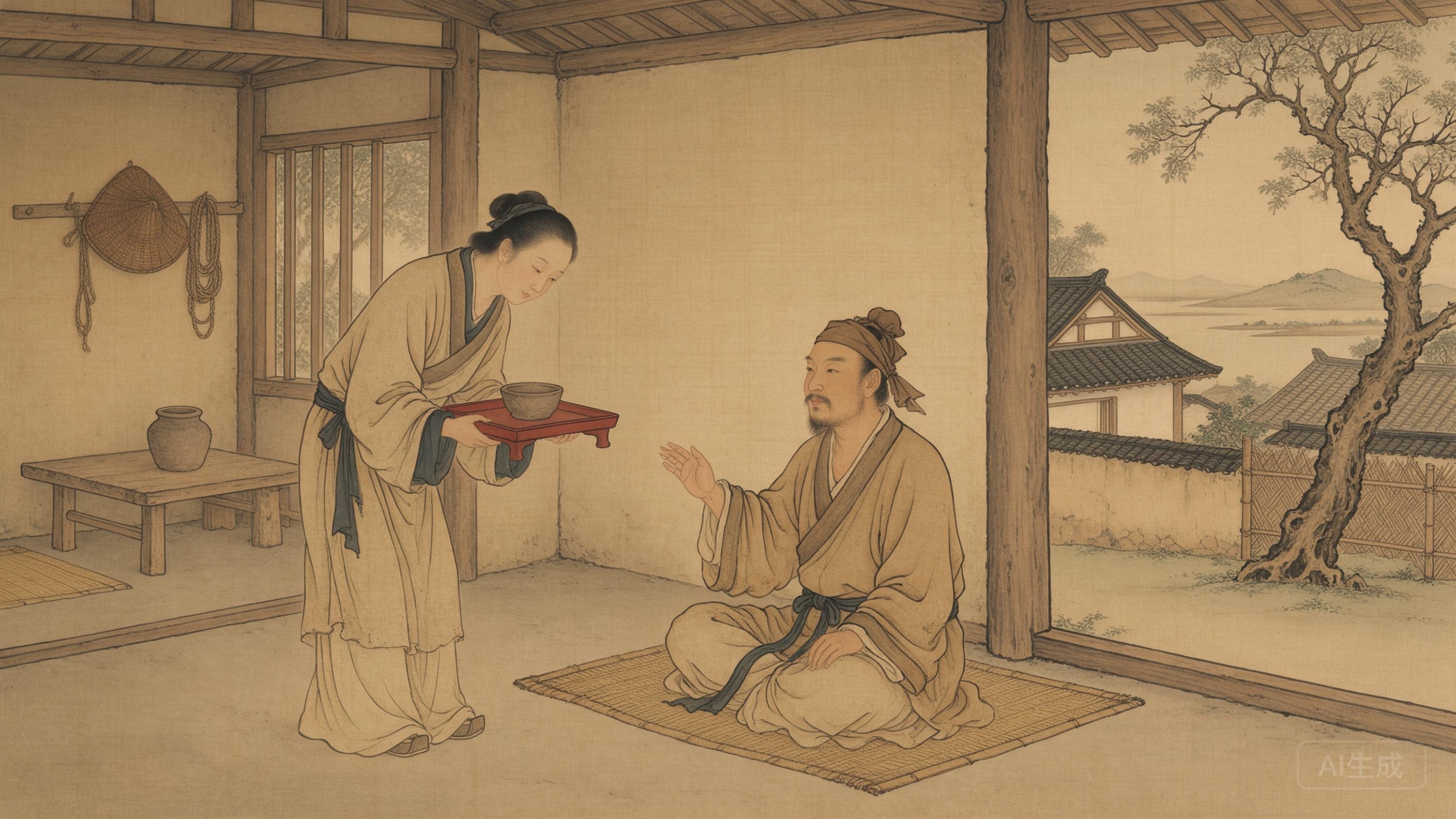
In Wu he attached himself to the household of Gao Botong, lodged under the side gallery and hired out to pound grain. Each day his wife had the food ready; not daring to look up in his presence, she raised the tray level with her eyebrows. Gao Botong noticed: "A hired man whose wife respects him like that is no ordinary person." He gave them rooms inside. Liang Hong shut himself away and wrote more than ten chapters. Dying, he asked not to be carried home for burial. Gao Botong sought a grave beside that of Yao Li, the assassin: "Yao Li was a man of fierce resolve, Boluan pure and high; let them lie near each other." After the burial his wife and children returned to Fufeng.
What the Proverb Keeps and Drops
Posterity kept the tray and forgot the gallery. Ju an qi mei now means a marriage of mutual respect, but the Book of the Later Han files the scene among recluses, not wives — a chapter on men who refused office. There the gesture is evidence in the householder's assessment, not the narrator's; what it proves is not that the couple loved well, but that Liang Hong's withdrawal was legible to a stranger watching a labourer at his door.
Later readers made it the emblem of marriage. In the same book's chapter on women, the bride Ma Lun, daughter of the scholar Ma Rong, tells her new husband that if he means to emulate Bao Xuan and Liang Hong, she will follow Shaojun and Meng Guang. Within a century the pair had become a byword for a modest household.
Yet the chapter gives Meng Guang the decisions. She sets the terms of her marriage, tests her husband's purpose, and asks whether he means to bow to the world. The man who would not serve an emperor was served at his own meal every day; the story's tenderness and its asymmetry are one sentence.
Sources & further reading
Editorial approach