Of all the Tang tales about scholars and the women of the pleasure quarters, this is the one that grants its heroine the least probable ending. Li Wa begins as a girl standing at a gate on Mingke lane, meets a student from the provinces who has just arrived to sit the examination, and is complicit in the scheme that strips him of everything. She ends as a titled lady with four sons in high office. Between those two points Bai Xingjian places a funeral singers' contest, a horsewhipping in the Apricot Garden, a bought-out contract and a wedding performed with the full six rites. What follows tracks the plot as the text gives it, and marks where Tang law and Tang office supply the frame — and where the story is only wishing.
The Tale of Li Wa comes down to us as juan 484 of the Taiping Guangji, the anthology compiled in the Song under Li Fang, and it is also known from its opening words as The Tale of the Lady of Qianguo. Its closing lines are signed by Bai Xingjian, a younger brother of the poet Bai Juyi, whom the Old Tang History praises for prose in his brother's manner and records as dying in the winter of 826. The opening ascription, however, calls the author an investigating censor, an office absent from that biography and hard to square with the tale's own closing date of a yihai year, which falls early in his life. Whether that ascription is the author's, a later addition, or a scribal error remains unresolved, so it is not treated here as biography. Glen Dudbridge's The Tale of Li Wa (1983) is the standard critical edition and English translation. No edict, dynastic history or epitaph records Li Wa, her student, or the title of Qianguo; the narrative summary follows the tale alone.
A Gate on Mingke Lane
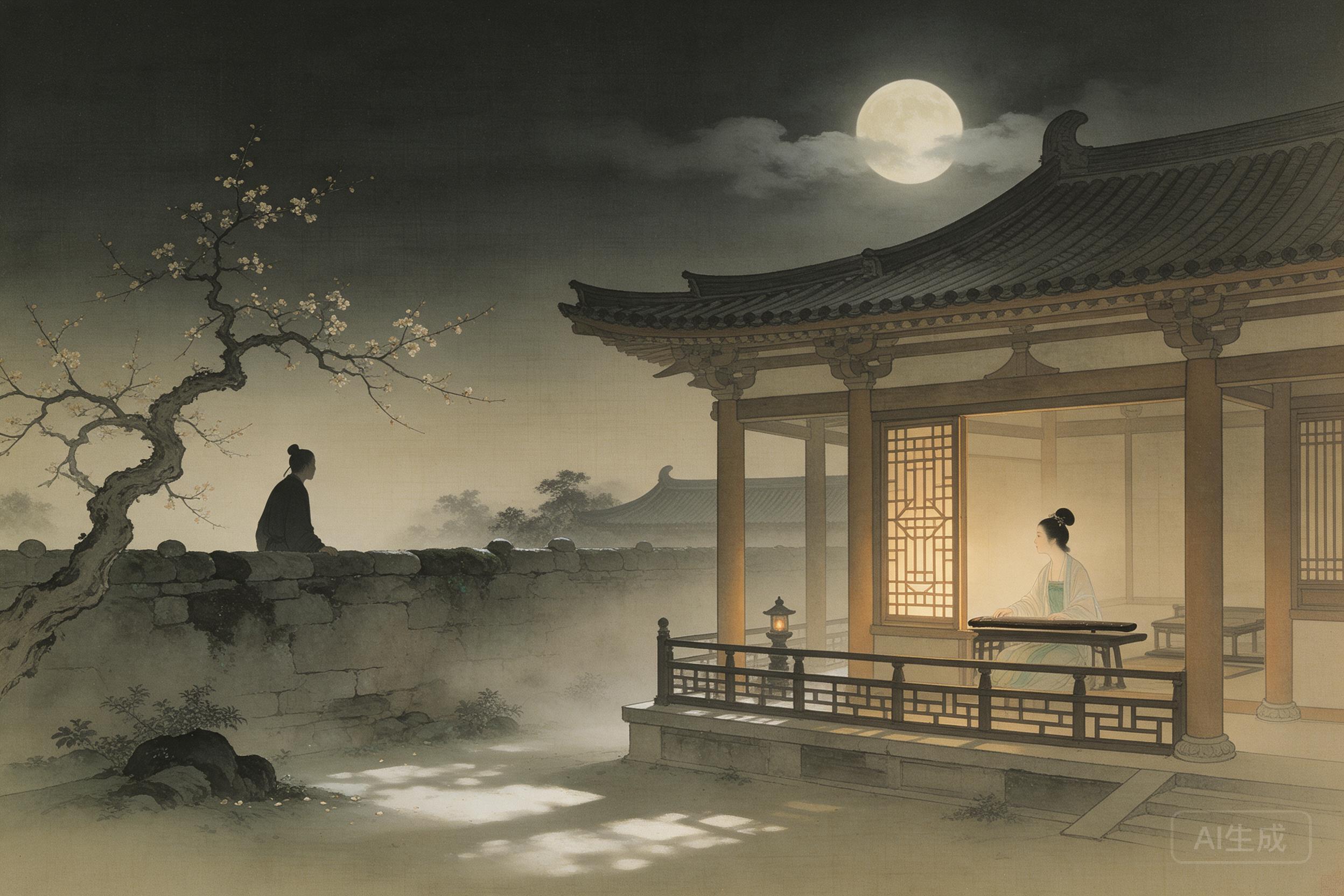
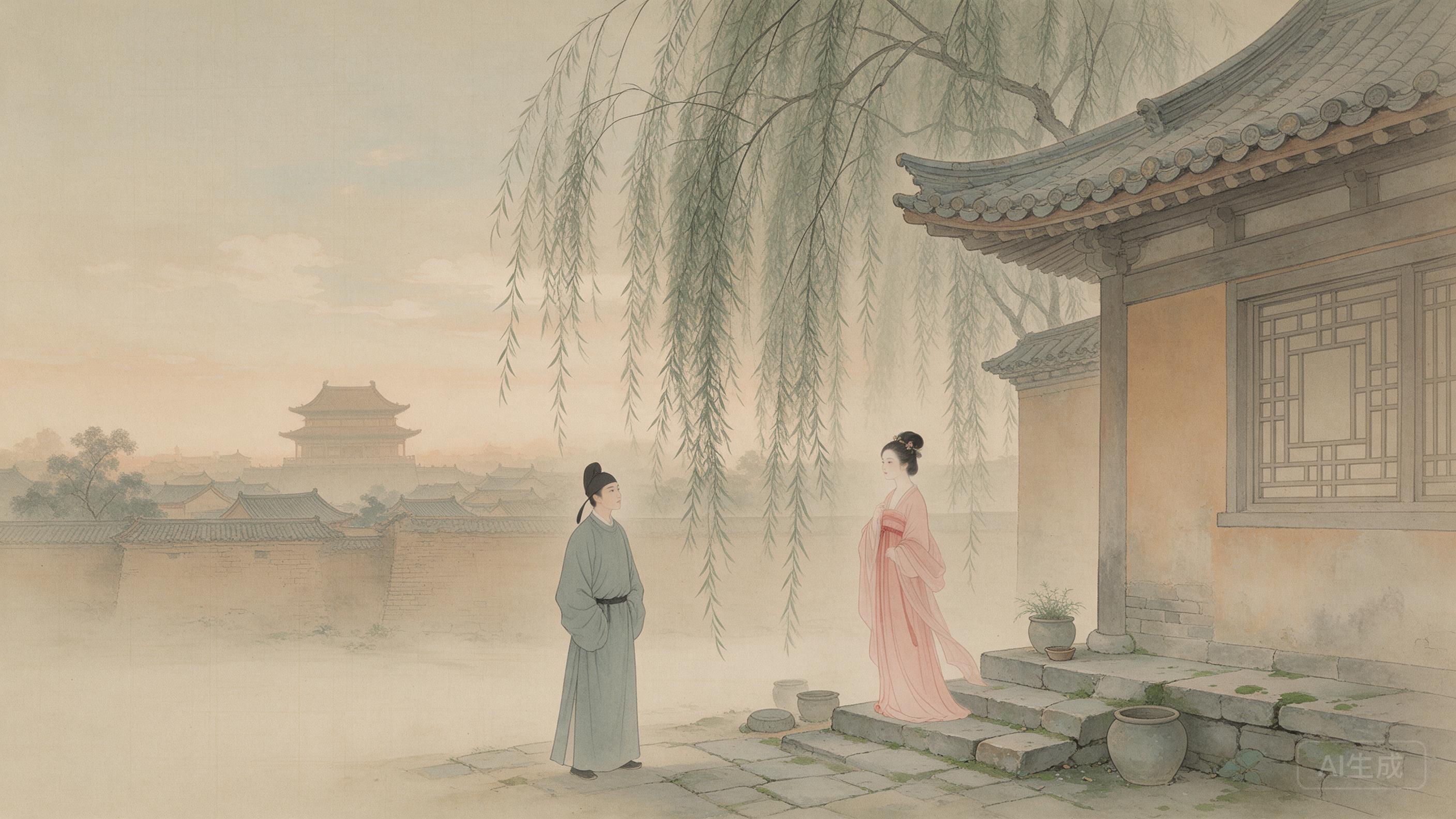
The tale is set in the Tianbao era (742–756). A young man of twenty travels from Changzhou to sit the provincial examination, confident that a top pass is a thing he can point to in his own palm. He lodges in Buzheng ward. Returning from the Eastern Market one afternoon, he enters the east gate of Pingkang ward and turns into Mingke lane, where a modest gate conceals a deep courtyard and a woman standing with two maids. He lets his riding crop fall so that he can linger.
The streets are not invented: Chang'an's residents lived in walled wards whose gates shut each night, and at dusk a drum sounded. The old woman warns him home before the curfew.
The House That Kept Accounts
A friend supplies the price of admission: the household is rich, its visitors noble, and not less than a million in cash would move the lady's resolve. Inside, he meets an old woman, white-haired and bent with age — Li Wa's mother, as it turned out.
That word needs care. Sun Qi's Beilizhi, written in the middle of the ninth century, says the mothers of such houses were often stand-ins, retired women of the trade installed as managers; it describes a later Chang'an than the tale's own, and explains the trade, not this line.
Li Wa takes him to visit an aunt; a rider brings word that the mother is gravely ill; Li Wa goes ahead, the aunt delays him with funeral talk, and the rooms are empty when he returns.
The Dirge Singer of the Eastern Market
Penniless, he drifts into a funeral undertaking house. Its eastern and western branches sign a contract and compete in singing dirges before tens of thousands. A long-bearded man sings "The White Horse"; then the young man in a black headcloth sings "Dew on the Leek": his voice rings clear through the trees, and before the melody ends his hearers are sobbing into their sleeves.
His father, in the capital for the annual accounting, is in that crowd. He lures the boy to the Apricot Garden east of Qujiang pool, strips his clothes, lashes him several hundred times with a horsewhip and leaves him for dead.
Nothing in this ruin is caused by war: no rebellion, no flight from the capital, no grave at Mawei appears in the text. He falls because a household has priced him and a father would rather have a dead son than a disgraced one.
The Embroidered Jacket
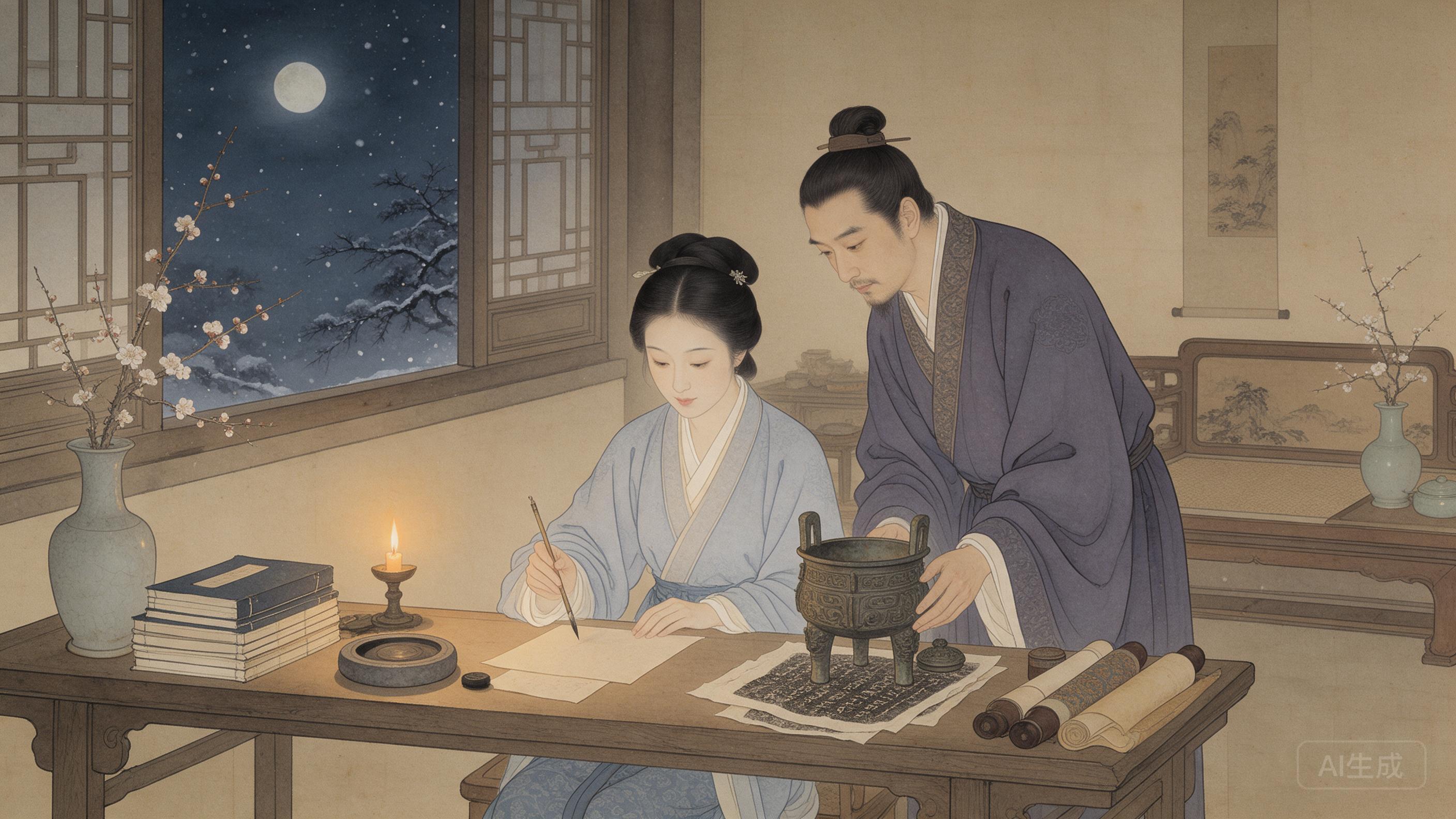
He lives as a beggar until Li Wa hears his voice and says the sentence on which the tale turns: that he should have come to this in a single morning, and that the fault is hers. She wraps him in her embroidered jacket, carries him to the western chamber and nurses him back across a year.
Then she buys her freedom, reckoning her earnings at no less than a thousand in gold and offering twenty years of food and clothing as her price. She calls him a son of a good family, a phrase that does the plot's work. Tang law set barriers between free and base: the Tang Code's household and marriage articles address unions between slaves or service households and commoners. Whether a courtesan counted as base was another question; the Beilizhi mentions women of good family fallen into the trade. The tale settles it by purchase, then marriage.
A hundred in gold of books from a shop near the Banner Pavilion, and he takes the top grade at his first sitting, first place in the forthright-remonstrance examination, and a post in Chengdu.
The Lady of Qianguo, and What the Tale Leaves Out
In Chengdu his father receives him and at last behaves as a gentleman should: he has the matchmaker carry the good will of the two houses and, with the full six rites, brings her home as his bride. The story then enfeoffs Li Wa as Lady of Qianguo and gives her four sons, all high officials; the least, it says, was still prefect of Taiyuan.
The title strains hardest against the institution. The New Tang History's Board of Officials chapter defines ladies of the state as the mothers and wives of first-rank officials and dukes of state, their court attendance graded by the husband's or son's rank. The title presupposes the standing the story has just handed its hero. It is a wish, not a record: no edict, biography or epitaph confirms it.
What survives is the tale's own guarantee — set down in the eighth month of autumn in a yihai year by Bai Xingjian of Taiyuan, who adds that he had the story from his grand-uncle. That is how a tale vouches for itself, not evidence that it happened.
Sources & further reading
- Taiping Guangji, juan 484: The Tale of Li Wa (Wikisource, Chinese text)
- Jiu Tang Shu (Old Tang History), juan 166: life of Bai Juyi, with the appended notice on his younger brother Bai Xingjian
- Xin Tang Shu (New Tang History), juan 46: Board of Officials, on the titles granted to the mothers and wives of high officials
- Beilizhi (Record of the Northern Quarter) by Sun Qi (Wikisource, Chinese text)
- Tanglü Shuyi (Tang Code with Commentary), juan 14: Household and Marriage
- Xi'an Tower – Commerce, Smithsonian Folklife Festival 2002: Chang'an's walled wards and its two markets