Tales of scholars and courtesans are usually read either as love stories or as disguised history, and neither reading holds. This guide offers a third way: watch how a tale constructs its names and its frame, let the documented city and the documented law explain the world the characters move in, and stop exactly where the evidence stops. The Tale of Li Wa is the main example, but the method travels to other Tang tales.
The Tale of Li Wa survives as juan 484 of the Taiping Guangji, the Song anthology compiled under Li Fang, and is also known from its opening words as the tale of the Lady of Qianguo. Its closing lines are signed by Bai Xingjian, a younger brother of Bai Juyi; the Old Tang History records his death in the winter of 826. The opening ascription calls him an investigating censor, an office that biography does not give him and that is hard to reconcile with the tale's own closing date of a yihai year; this guide therefore treats the ascription as unresolved and does not use it as biography. Glen Dudbridge's The Tale of Li Wa (1983) remains the standard critical edition and English translation. No edict, dynastic history or epitaph records Li Wa, her student, or the title of Qianguo. This essay is a guide to reading: it does not retell the plot and quotes the tale only for the features under discussion.
The Frame Before the Story
Readers usually meet *The Tale of Li Wa* in juan 484 of the *Taiping Guangji*, the Song anthology. A guide might begin half a step back, with the frame. The first sentence hands the heroine a title she has not yet earned in the narrative — Lady of Qianguo — calls her a Chang'an courtesan, praises her rare conduct, and names her biographer: Bai Xingjian, investigating censor. The final line dates the piece to the eighth month of a *yihai* year.
Both edges invite checking, and neither checks clean. The *Old Tang History* records for Bai Xingjian — a younger brother of the poet Bai Juyi — an examination pass late in the Zhenyuan period, a run of ordinary appointments, and a death in the winter of 826. No censorate office appears. Counting back from the *yihai* year, the tale predates his official career. The signature, the date, or both may have been altered in transmission. What you hold is a signature used as a literary gesture, with no archive behind it.
Names That Are Not Names
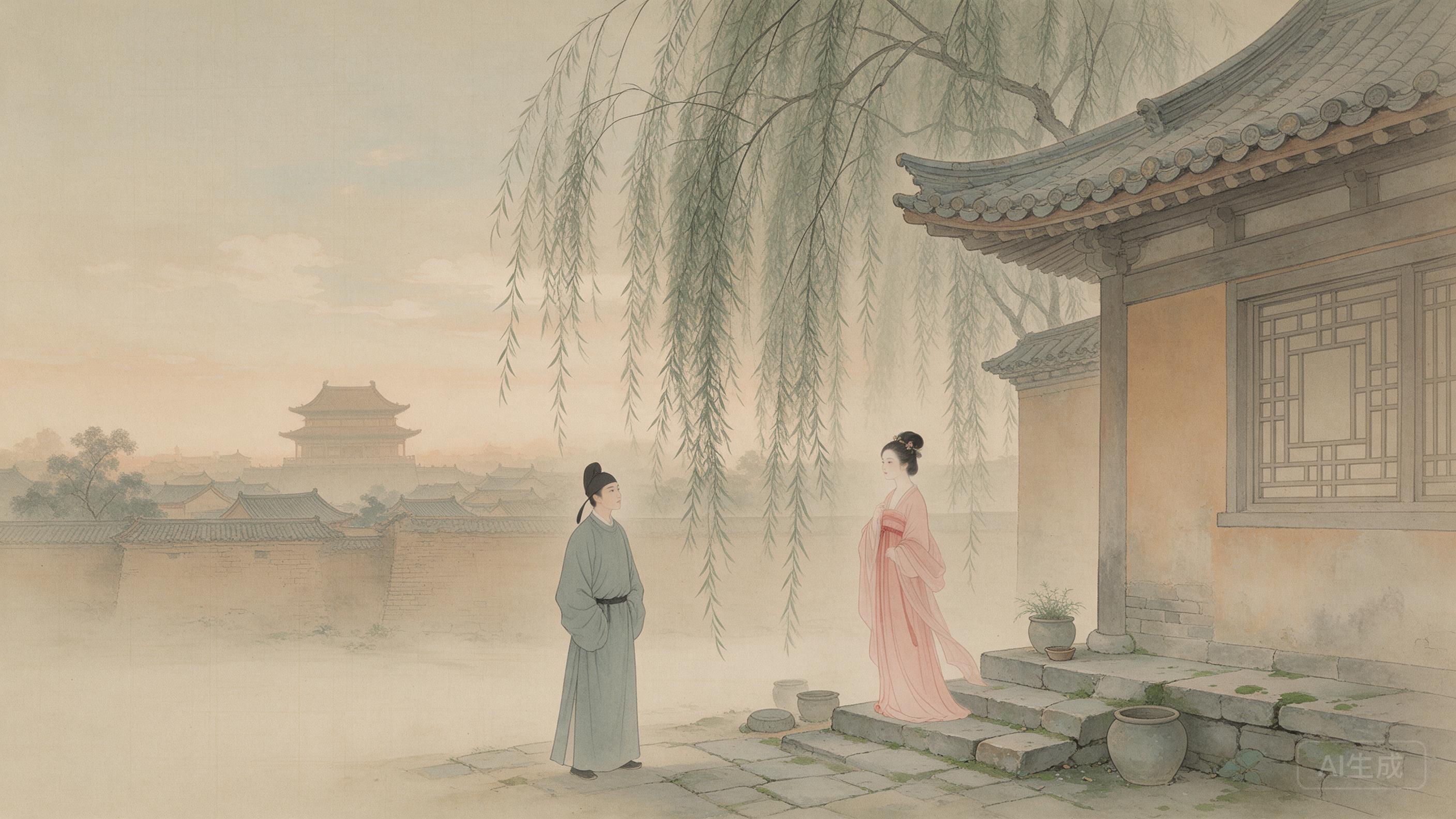
Within the frame almost no one is named. The father is the Duke of Xingyang, a clan label rather than a man. The hero is "the student." The heroine is "Wa," a common word for a girl or a woman of the quarter. Readers used to documents may hear lost records here; the tale says otherwise, noting that the father's name is left out on purpose. Withholding names was ordinary in Tang fiction, and here it works. Characters become types — a well-born candidate, a woman of the quarter, a father who holds rank — and the reader learns where invention must stop. Nothing supplies Li Wa's home district, age, real name, or the city of the wedding. Fill those blanks and the story runs more smoothly and lies a little more.
What the City Can Explain
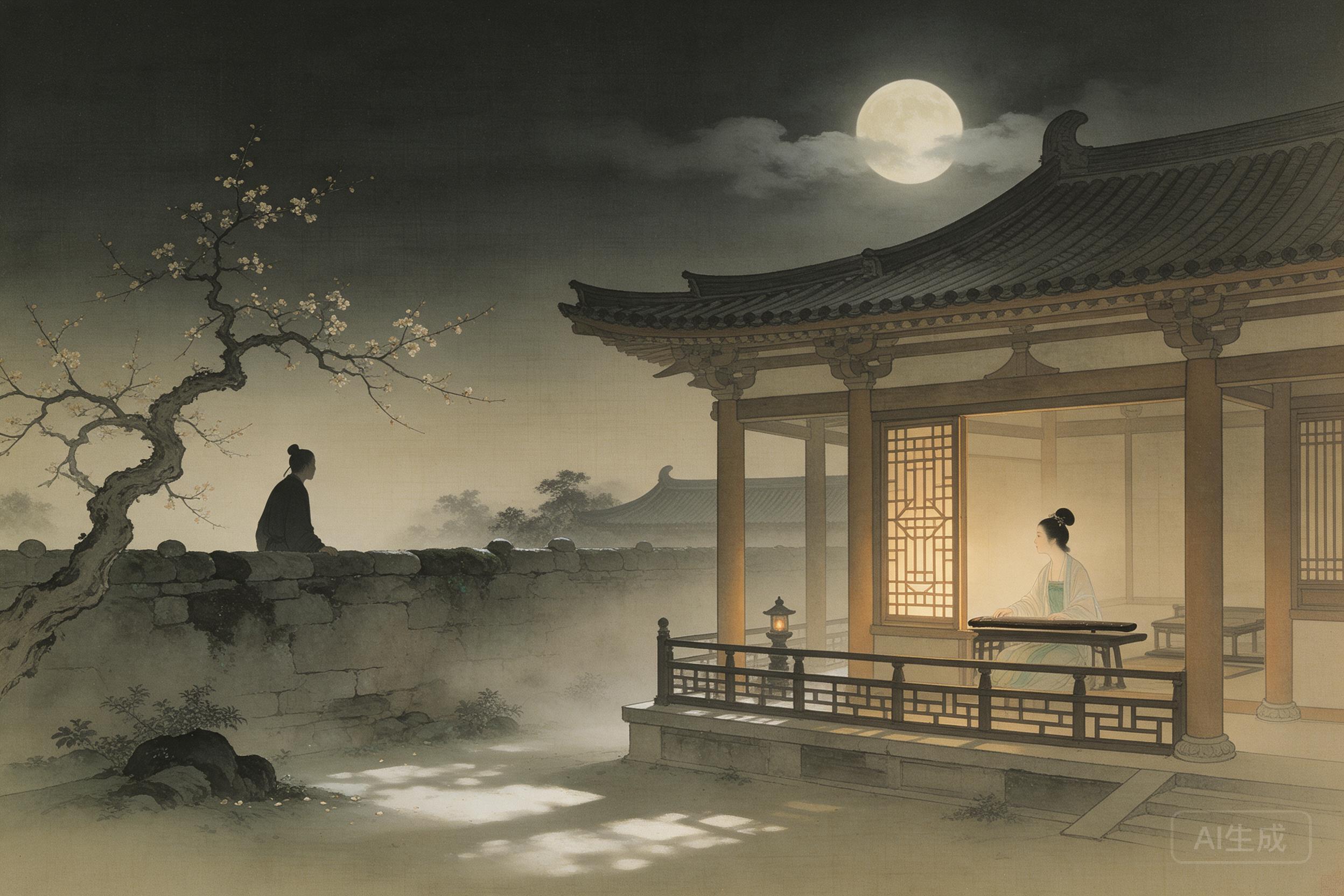
The props are checkable. Chang'an was a grid of walled wards with gates locked at nightfall, its trade gathered in the Eastern and Western Markets; the drum that closes an evening in the tale belongs to that routine. The establishment the student pins his hopes on matches the milieu of the *Beilizhi*: performers enrolled with the court music bureau, households fronted by stand-in mothers, contracts that could be bought out. Funeral workshops were an ordinary urban business, so a destitute scholar can believably live by singing dirges. Such details establish no event; they show that the tale is written from inside a functioning social order, so its turns read as plausible rather than capricious. The city corroborates the story's legibility, not its occurrence.
The Law and the Line It Draws
A legal line is crossed in the story, and it is real — narrower than plot summaries allow. In juan 14 of the *Tanglü Shuyi*, the household and marriage section, article 191 bars a slave from taking a commoner's daughter, and article 192 bars households of hereditary service from marrying commoners: two clauses, two wordings, other dependent statuses reached by analogy. No single clause sweeps four categories together. Nor does "courtesan" equal base status by default: the *Beilizhi* names women of good family who fell into the quarter, separates registered from unregistered performers, and notes buyout and redemption — describing the late Tang quarter, not the Tianbao of the tale's setting. Rank takes the same care. In the *New Tang History* the style *guo furen* ranked highest among outer consort titles and attached to the mother or wife of a first-rank official or duke of state, court attendance being graded by husband or son. A courtesan lifted to that height is the tale's wish for her, not an investiture on record.
Where the Evidence Ends
The closing pages thin out fastest. Inside the story Li Wa receives her title, raises four sons who all reach high office — the least of them still prefect of Taiyuan — and the dirge contest pulls a crowd numbered in the tens of thousands. Magnitudes of narration, not measurements of society. The last lines add that the tale reached the author through a grand-uncle who had served three terms alongside the student: a standard move for lending credibility, and no second witness. Note, too, what never appears. No rebellion, no flight, no warfare — ruin arrives through a staged abandonment and a father's horsewhip. To read the tale as wartime separation is to import an event the text does not contain.
Everything else survives. From it a reader learns how the capital policed its hours, where the code drew the line between courtesan and wife, how family honour could end in a whip, and how far a Tang audience would follow a wish. None of that makes the tale a record of what happened, and holding both facts at once costs the story nothing.
Sources & further reading
- Taiping Guangji, juan 484: The Tale of Li Wa (Wikisource, Chinese text)
- Jiu Tang Shu (Old Tang History), juan 166: life of Bai Juyi, with the appended notice on his younger brother Bai Xingjian
- Xin Tang Shu (New Tang History), juan 46: Board of Officials, on the titles granted to the mothers and wives of high officials
- Beilizhi (Record of the Northern Quarter) by Sun Qi (Wikisource, Chinese text)
- Tanglü Shuyi (Tang Code with Commentary), juan 14: Household and Marriage
- Xi'an Tower – Commerce, Smithsonian Folklife Festival 2002: Chang'an's walled wards and its two markets